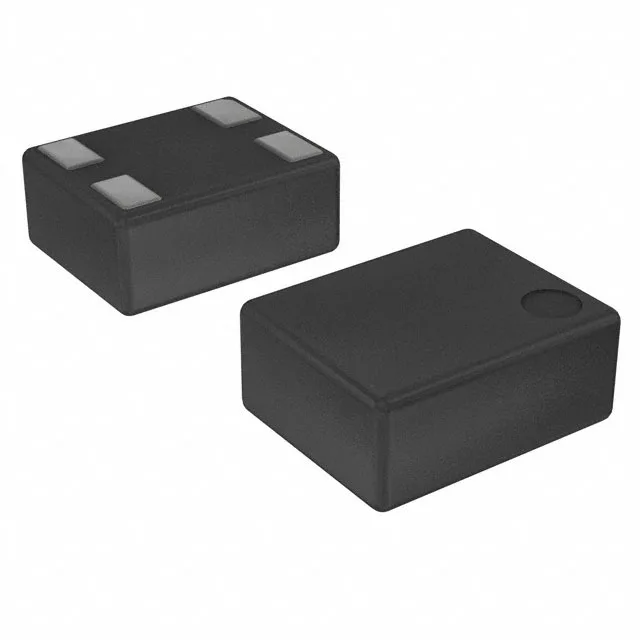
What the AEC-Q100 grade means for your BOM
The DSC6101MI2A-PROGRAMMABLE carries an AEC-Q100 rating — this is the automotive IC qualification standard covering temperature grade, reliability stress, and PPAP documentation. Capable is not qualified; this part has the paper trail an OEM auditor expects for under-hood or cabin electronics. That covers passenger-compartment and some engine-bay-adjacent locations, but not direct under-hood (Grade 0, -40°C to 150°C). If the target is a hot-side ECU, the grade needs re-evaluation.
Frequency range and stability — fit for timing
Programmable from 1 MHz to 100 MHz, this MEMS-based XO replaces quartz oscillators across a broad clock domain — MCU, FPGA, or serial-interface reference. The CMOS output is single-ended, so routing to a single clock input is straightforward; no differential termination needed. Total frequency stability is ±25 ppm, which includes initial tolerance, temperature drift, and aging. For a 100 MHz clock, that's ±2,500 Hz of absolute error — tight enough for UART bit-rate accuracy and most processor PLL references.
This simplifies BOM consolidation if the board already runs a mixed-voltage domain. Typical supply current is 3 mA — negligible in a power budget, but the enable/disable function can pull the output to high-Z and drop current further during system sleep. The MEMS resonator itself draws no start-up current like a quartz crystal, so the oscillator is ready on power-up without a settling delay.
No official successor is listed in the record. Sourcing is through independent surplus channels; quantities and pricing are confirmed at RFQ. No pin-compatible drop-in from Microchip's active DSC61XX line is documented — verify the BOM position for a functional alternative.