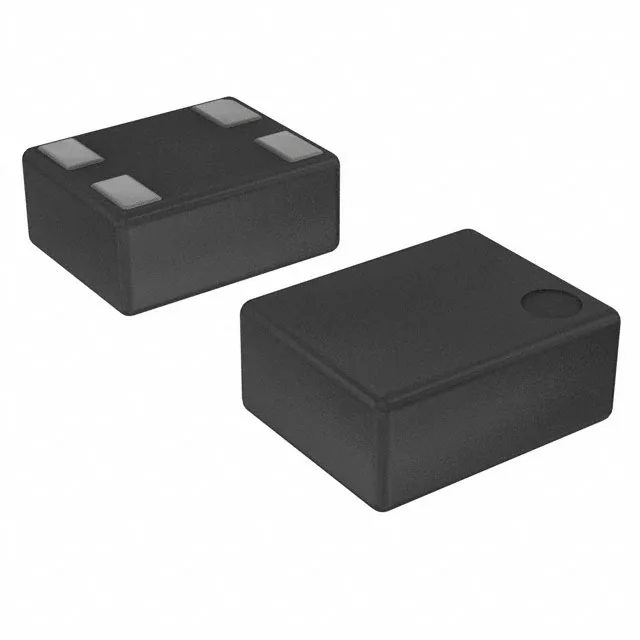
Microchip Technology DSC6101MI2A-006.1679T — Crystals & Oscillators

DSC6101MI2A-006.1679T XO, 6.1679 MHz, AEC-Q100, MEMS

MPNDSC6101MI2A-006.1679T
Obsolete

Microchip Technology DSC61XX series XO (Standard) MEMS oscillator, 6.1679 MHz, CMOS output, ±25 ppm stability, 1.8V–3.3V supply, AEC-Q100, 4-VFLGA package, Tape & Reel.

Sourced new & surplus through independent channelsAuthenticity-screened · ESD-safe packingListing updated Jul 2026

Specifications

DSC6101MI2A-006.1679T specifications
ParameterValue
TypeXO (Standard)
SeriesDSC61XX
MountingSurface Mount
Voltage1.8V ~ 3.3V
Current - supply3mA (Typ)
Current - supply (Disable)80µA (Typ)
Frequency6.1679 MHz
Frequency stability±25ppm
Operating temperature-40°C~85°C
Size (Dimension)0.079\" L x 0.063\" W (2.00mm x 1.60mm)
Height - seated0.035\" (0.89mm)
OutputCMOS
PackageTape & Reel (TR)
RatingsAEC-Q100
FunctionEnable/Disable
Base resonatorMEMS
Case4-VFLGA

Product details

Lifecycle reality for the DSC6101MI2A-006.1679T

The Microchip DSC6101MI2A-006.1679T is listed as Obsolete.

Automotive-grade MEMS timing at 6.1679 MHz

Frequency stability is ±25 ppm — tight enough for CAN, LIN, and most MCU clock trees in automotive body electronics, though a precision GPS or radar reference would typically require ±10 ppm or better. The CMOS output drives standard digital logic loads directly without an external level translator.

4-VFLGA package and board integration

Surface-mount with a 4-pin footprint: the land pattern is standard for this class of MEMS oscillator and matches the Microchip DSC61XX series layout. The small footprint leaves room for decoupling capacitors close to the supply pin, which matters for keeping supply noise from coupling into the output phase noise.

Frequently asked questions

What is the closest pin-compatible alternative to DSC6101MI2A-006.1679T?

The DSC61XX series shares the same 4-VFLGA footprint and pinout across frequencies, but a direct replacement at 6.1679 MHz with the same ±25 ppm stability and AEC-Q100 rating would need to be verified against the current Microchip MEMS oscillator portfolio. A board spin may be required for a different package or frequency.