The DSC6101JI2B-016.7772T: Maximum supply current is 3 mA typical — the MEMS resonator draws negligible start-up energy compared to a quartz crystal, and the CMOS output stage consumes power proportional to frequency × load capacitance. For a battery-backed always-on clock domain (RTC wake timer, CAN transceiver listen mode), 3 mA is low enough to run off a coin cell for weeks.
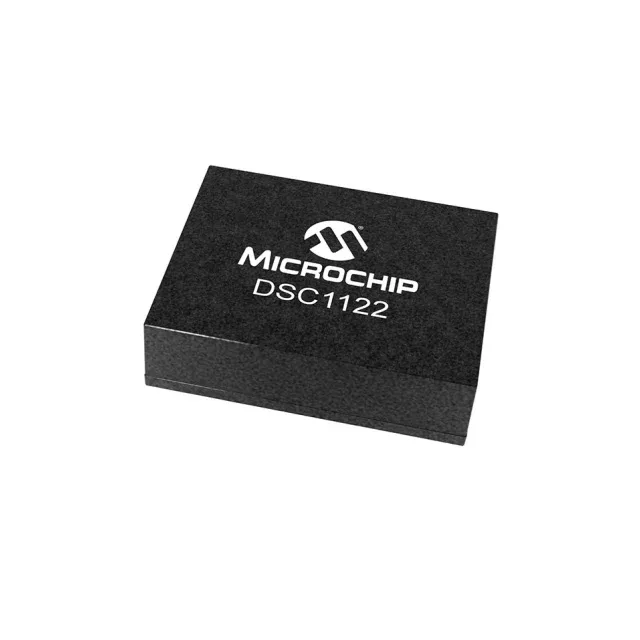
DSC6101JI2B-016.7772T MEMS XO, 16.7772 MHz, AEC-Q100
MPNDSC6101JI2B-016.7772T
Active
Microchip Technology DSC61XXB series XO (Standard) MEMS oscillator, 16.7772 MHz, CMOS output, ±25 ppm, 1.8V~3.3V supply, AEC-Q100, 4-VLGA package, Tape & Reel.
Independent supplier — new & surplus stockAuthenticity-screened · ESD-safe packingListing updated Aug 2026
Specifications
| Parameter | Value |
|---|---|
| Type | XO (Standard) |
| Series | DSC61XXB |
| Mounting | Surface Mount |
| Supply voltage | 1.8V ~ 3.3V |
| Current - supply | 3mA (Typ) |
| Frequency | 16.7772 MHz |
| Frequency stability | ±25ppm |
| Operating temperature | -40°C~85°C |
| Size (Dimension) | 0.098\" L x 0.079\" W (2.50mm x 2.00mm) |
| Height - seated | 0.035\" (0.89mm) |
| Output | CMOS |
| Package | Tape & Reel (TR) |
| Ratings | AEC-Q100 |
| Function | Enable/Disable |
| Base resonator | MEMS |
| Case | 4-VLGA |
Product details
Frequently asked questions
What supply voltage range does this oscillator accept?
The same device works on a 1.8 V MCU rail and a 3.3 V peripheral bus without a voltage regulator or level translator.
What is the frequency stability of this MEMS oscillator?
This stability supports CAN FD, USB Full-Speed, and basic Ethernet clocking, but is not tight enough for IEEE 1588 or Synchronous Ethernet.
What compliance documentation does Microchip provide for this part?
The part is AEC-Q100 qualified and supplied on Tape & Reel. RoHS and REACH compliance documentation is available from Microchip's standard product support channels.