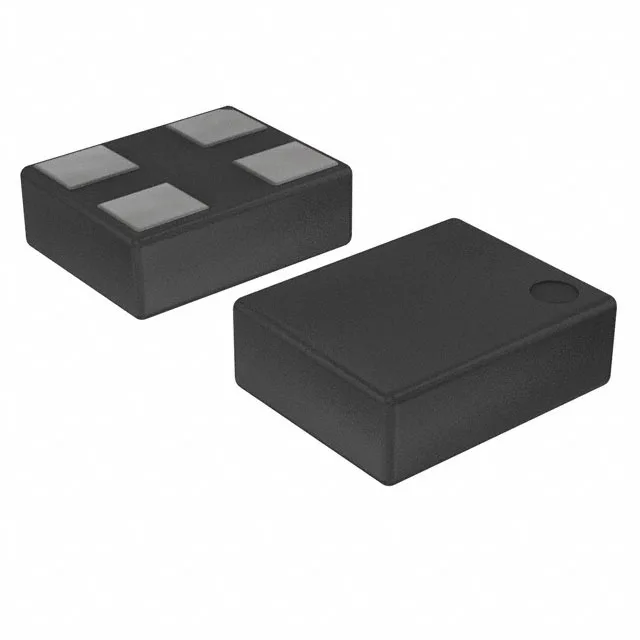
What this MEMS oscillator brings to the board
The DSC6101JI1B-019.2000: The MEMS resonator gives it an edge over quartz in shock and vibration tolerance — useful if the board lives near a motor or on a vehicle chassis — and the startup time is typically under a few milliseconds, so the processor isn't waiting for the clock to settle.
Power budget and enable control
Active current draw is 3 mA typical at 19.2 MHz — negligible in most systems, but the real win is the disable mode: pulling the Enable/Disable pin low drops consumption to 1.5 µA max. That lets the firmware gate the clock to a peripheral or an entire subsystem during sleep, saving battery in a sensor node or keeping the module cool in a sealed enclosure.
That means it is safe to specify for a new BOM without worrying about a last-time-buy window closing mid-production.