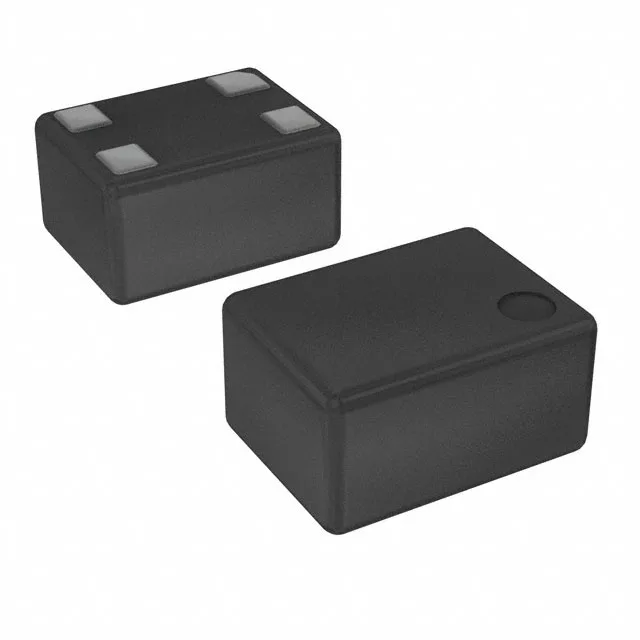
Microchip Technology DSC6101HL3B-024.0000 — Crystals & Oscillators

DSC6101HL3B-024.0000 MEMS XO, 24 MHz, CMOS, AEC-Q100

MPNDSC6101HL3B-024.0000
Active

Microchip Technology DSC61XXB series MEMS XO (Standard), 24 MHz, CMOS output, ±20 ppm stability, 1.71V-3.63V supply, AEC-Q100 qualified, -40°C to 105°C, 4-VFLGA package.

Sourced new & surplus through independent channelsAuthenticity-screened · ESD-safe packingListing updated Aug 2026

Specifications

DSC6101HL3B-024.0000 specifications
ParameterValue
TypeXO (Standard)
SeriesDSC61XXB
MountingSurface Mount
Voltage1.71V ~ 3.63V
Current - supply3mA (Typ)
Frequency24 MHz
Frequency stability±20ppm
Operating temperature-40°C~105°C
Size (Dimension)0.063\" L x 0.047\" W (1.60mm x 1.20mm)
Height - seated0.035\" (0.89mm)
OutputCMOS
PackageBag
RatingsAEC-Q100
FunctionEnable/Disable
Base resonatorMEMS
Case4-VFLGA

Product details

24 MHz MEMS oscillator with ±20 ppm stability

The DSC6101HL3B-024.0000: The ±20 ppm stability covers temperature, supply, and aging combined, so the clock stays within tolerance for USB full-speed, CAN, or SPI interfaces without external trimming.

AEC-Q100 qualification and industrial temperature range

The Enable/Disable pin (OE) lets the output go high-Z when pulled low, reducing supply current to near-zero for power-down or test modes. This is useful for shared clock busses where the oscillator must be tri-stated during boundary scan or for idle power reduction in battery-backed systems.

Package and supply current

The 4-pin land pattern matches the standard MEMS oscillator footprint (VDD, GND, OUT, OE), making it a drop-in for other 4-pin LGA oscillators. Maximum supply current is 3 mA typical — notably lower than a quartz oscillator at 24 MHz. The MEMS core draws less power, which keeps the thermal budget tight in densely populated boards and extends battery life in portable equipment.

Frequently asked questions

What is the closest pin-compatible alternative to DSC6101HL3B-024.0000?

Within the DSC61XXB series, other 24 MHz variants with the same 4-VFLGA package and pinout (e.g., different stability grades or temperature ranges) are pin-compatible.