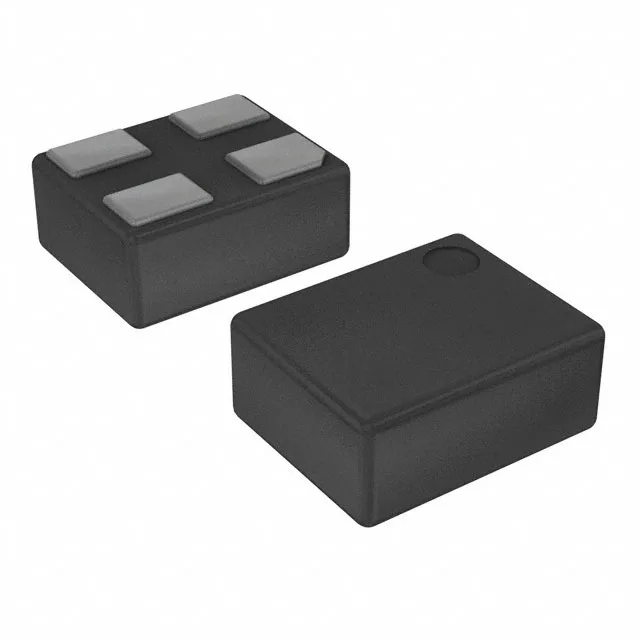
What the AEC-Q100 rating means for this oscillator
The DSC6013MI2A-000.0000T: For a clock source in an engine-control module or a cabin-domain controller, that certification removes the need for a separate qualification run. The ±25 ppm total frequency stability holds the timing accuracy across that span, which matters for CAN-FD or Ethernet PHY reference clocks where bit-time margin is tight.
When the Standby function is asserted, the oscillator draws 12 µA max. That is the quiescent budget for a battery-backed real-time clock or a wake-up receiver that needs the reference off most of the time. The 1.3 mA typical active current is the draw when the output is toggling at the programmed frequency.
MEMS resonator vs quartz — the practical difference
For a clock mounted on a PCB near a solenoid valve or a cooling fan, the MEMS structure does not fracture or shift frequency under mechanical stress the way a quartz blank can. The 4-SMD no-lead package (2.00mm x 1.60mm footprint, 0.89mm seated height) is the standard MEMS oscillator land pattern. The blank-programmable nature means the part ships without a frequency set — it must be programmed by the user or a programming house before assembly.