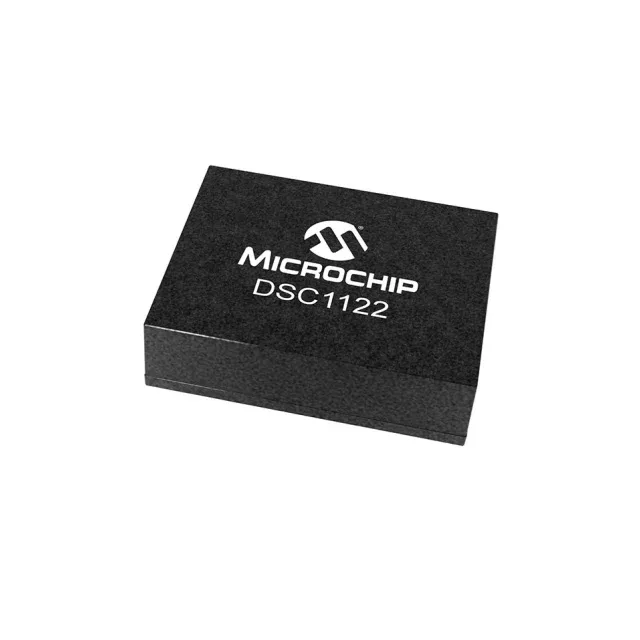
The DSC6013JI1B-063.2200T: That MEMS base means it tolerates shock and vibration better than a quartz can — no crystal fracture risk in an automotive or industrial enclosure, and no aging drift from the crystal blank. The output is CMOS, so it drives the clock input of an MCU, FPGA, or PHY directly without an external level translator. The 1.3 mA typical supply current (1.3mA Typ) is low enough that this oscillator can run continuously from a battery-backed domain without eating into the sleep budget.
AEC-Q100 and the automotive temperature band
For a design targeting PPAP or IATF 16949, having an AEC-Q100 oscillator on the BOM simplifies the submission package. The MEMS resonator does not exhibit the activity dips or frequency jumps that quartz can show at certain temperatures.
Standby function and power-down current
The Standby (Power Down) function lets you gate the oscillator output with a logic-level signal. When disabled, the supply current drops to 1.5 µA typical — low enough that a coin cell or supercap can hold the clock domain in a sleep state for months. The enable pin is active-high; if unused, tie it to VDD to keep the oscillator running. Package is a 4-VLGA (2.50mm x 2.00mm), 0.89 mm seated height. The land pattern is standard for MEMS oscillators in this footprint — check your PCB layout against the Microchip recommended pad geometry; the centre pad is a thermal and ground connection, not a signal pin.