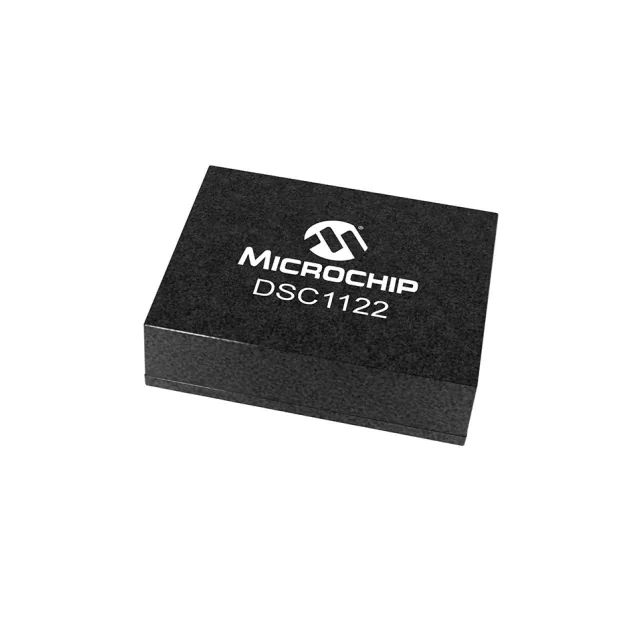
The DSC6011MI2B-019.2000T: That means it can clock a 3.3V logic domain or a 1.8V MCU core without a separate level translator — the same part works across both rails. For a CAN bus or Ethernet PHY reference, that holds the bit-time jitter well within the receiver's window — no external trim capacitor or VCXO needed. Active current is 1.3 mA typical; standby (power-down) drops to 1.5 µA. On a battery-backed ECU that sleeps between ignition cycles, the oscillator's own draw is negligible — the 1.5 µA standby is below the module's own leakage floor.
Package and board-fit — 4-VFLGA
Surface-mount only; the 4-pin LGA has a centre thermal pad that should be tied to the ground plane for best thermal and electrical performance, though the 1.3 mA draw generates negligible heat.
Automotive-grade timing — AEC-Q100
Rated AEC-Q100, which means this oscillator passed the automotive IC qualification suite: temperature cycling, ESD, latch-up, and extended-life testing at Grade 2 (-40°C to +85°C). Suitable for cabin electronics, infotainment, ADAS sensor modules, and body controllers that see under-hood temperature swings. Useful for engine-bay or chassis-mounted ECUs that see constant vibration.