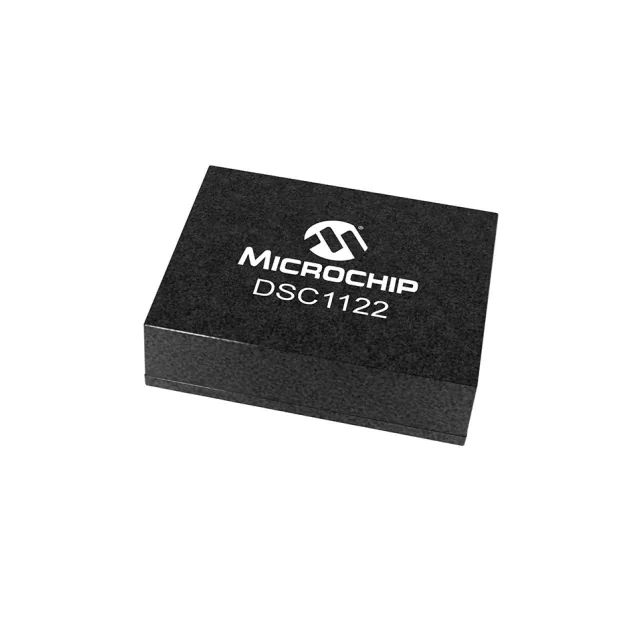
AEC-Q100 qualification for automotive clock trees
The DSC6011MI2B-010.0000T is an AEC-Q100 qualified MEMS-based XO (Standard) producing a 10 MHz CMOS output. For an automotive ECU, this means the part has passed the full suite of AEC-Q100 stress tests — including high-temperature operating life (HTOL) at 150°C, temperature cycling, and ESD characterization — and comes with the PPAP documentation an OEM auditor expects. Capable is not qualified: this oscillator carries the AEC-Q100 grade, so a tier-1 supplier can place it into a production BOM without the qualification delta that delays PPAP submission.
Standby power-down for battery-sensitive modules
In a telematics or body-control module that wakes periodically on a CAN message, this standby current is below the module's sleep-budget allocation for the clock source — no external load switch needed. Active current is 1.3mA typical at 10 MHz — low enough that thermal rise in the 4-VFLGA package (2.0mm x 1.6mm) is negligible even at 85°C ambient. The MEMS resonator itself consumes no quartz heater current, which avoids the self-heating drift that can push a quartz oscillator past its ±25ppm stability spec in a sealed enclosure.
The 4-pin land-grid array uses the standard MEMS oscillator pinout: pin 1 output enable/standby, pin 2 ground, pin 3 output, pin 4 supply. Decoupling with a 100nF capacitor between pins 4 and 2, placed within 2mm of the package, keeps the supply clean at 10 MHz. Surface-mount tape-and-reel packaging (TR) supports automated pick-and-place at high volume. The small body and low profile fit under conformal coating or potting without shadowing the MEMS die.