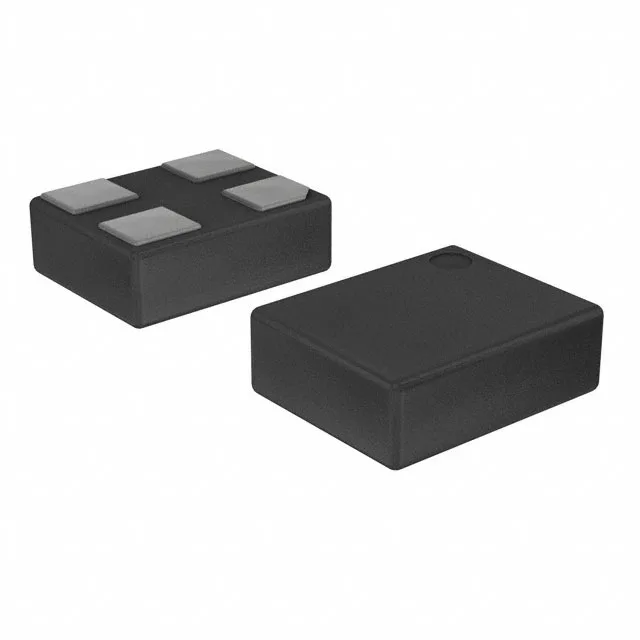
50 MHz MEMS oscillator with AEC-Q100 grade
The DSC6011JI1A-050.0000: The MEMS structure means the oscillator's frequency is set by a silicon micromachined resonant cavity, which gives it better shock and vibration immunity than a quartz crystal — a real advantage on a board that sees mechanical stress or high-G environments. Rated AEC-Q100, this part is qualified for automotive temperature and reliability stress.
Supply range, current draw, and standby function
Typical current draw is 1.3 mA — low enough that a battery-backed real-time clock or always-on sensor node can leave it running without a significant drain penalty. This is useful for gating the clock to a peripheral that sleeps most of the time — the oscillator wakes on a control signal and stabilises within the datasheet's startup time.
Package, footprint, and frequency stability
The small footprint saves board space compared to a standard quartz oscillator can, and the no-lead construction eliminates bent-lead failures during reflow. For a 50 MHz clock, that translates to a maximum frequency error of ±2.5 kHz — tight enough for most MCU and FPGA clock inputs that specify a ±100 ppm or looser tolerance.
Lifecycle reality — obsolete, sourced to order
Microchip lists the DSC6011JI1A-050.0000 as Obsolete. Availability is lot-specific and confirmed at quote time. If you are qualifying a replacement, the DSC60XX family includes other 50 MHz XO variants with the same footprint and pinout — check the output type and supply range against your design before swapping.