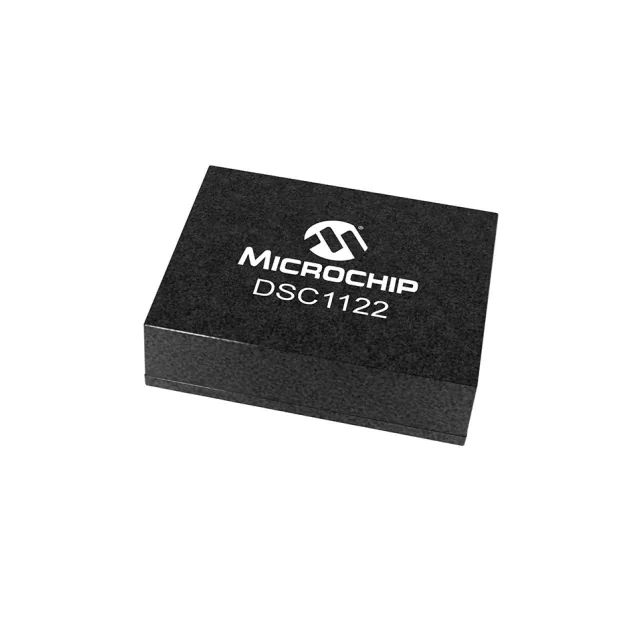
Microchip Technology DSC6011HI2B-050.0000T — Crystals & Oscillators

Microchip DSC6011HI2B-050.0000T MEMS XO, 50 MHz, AEC-Q100

MPNDSC6011HI2B-050.0000T
Active

Microchip Technology DSC60XXB series MEMS XO (Standard), DSC6011HI2B-050.0000T, 50 MHz, CMOS output, AEC-Q100, 1.8V to 3.3V supply, ±25 ppm stability, -40°C to 85°C, 4-VFLGA package, Tape & Reel.

Independent supplier — new & surplus stockAuthenticity-screened · ESD-safe packingListing updated Aug 2026

Specifications

DSC6011HI2B-050.0000T specifications
ParameterValue
TypeXO (Standard)
SeriesDSC60XXB
MountingSurface Mount
Supply voltage1.8V ~ 3.3V
Current - supply1.3mA (Typ)
Current - supply (Disable)1.5µA (Typ)
Frequency50 MHz
Frequency stability±25ppm
Operating temperature-40°C ~ 85°C
Size (Dimension)0.063\" L x 0.047\" W (1.60mm x 1.20mm)
Height - seated0.035\" (0.89mm)
OutputCMOS
PackageTape & Reel (TR)
RatingsAEC-Q100
FunctionStandby (Power Down)
Base resonatorMEMS
Case4-VFLGA

Product details

Active MEMS oscillator — 50 MHz, AEC-Q100, 1.8 V–3.3 V supply

The DSC6011HI2B-050.0000T: AEC-Q100 qualification means it passes the automotive-grade reliability stress and temperature cycling tests — suited for under-hood or chassis-domain electronics where a quartz crystal might fail under vibration or thermal shock.

MEMS resonator vs quartz — shock and vibration advantage

The base resonator is a MEMS structure rather than a quartz blank. MEMS oscillators survive higher mechanical shock and vibration levels than quartz-based equivalents — a meaningful difference for automotive, industrial, or portable equipment exposed to drops or continuous vibration.

Frequently asked questions

Is DSC6011HI2B-050.0000T AEC-Q100 qualified?

Yes, the DSC6011HI2B-050.0000T carries AEC-Q100 qualification, meaning it meets the automotive IC reliability and temperature-grade requirements for under-hood and chassis applications.

What is the standby function of DSC6011HI2B-050.0000T?

The standby (power-down) function disables the output and reduces current consumption to 1.5 µA typ. This allows the oscillator to be gated off during system sleep states, saving battery power in portable or automotive modules.