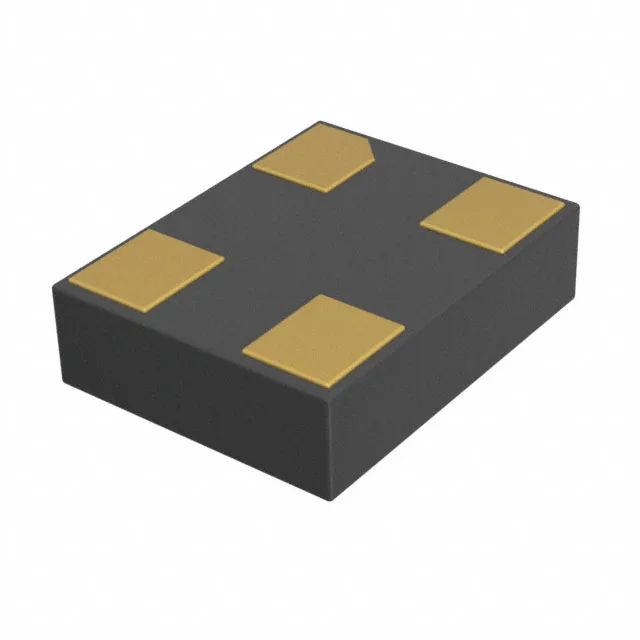
Microchip Technology DSC6011CI2A-018.0000 — Crystals & Oscillators

DSC6011CI2A-018.0000 MEMS XO – 18 MHz, CMOS, AEC-Q100

MPNDSC6011CI2A-018.0000
End of Life

Microchip DSC60XX series MEMS XO, 18 MHz CMOS output, AEC-Q100 qualified, 4-VDFN package, 1.71V–3.63V supply, ±25 ppm stability, -40°C to +85°C.

$1.0700Ref. price · indicative, final on quote
Independent supplier — new & surplus stockAuthenticity-screened · ESD-safe packingListing updated Aug 2026

Specifications

DSC6011CI2A-018.0000 specifications
ParameterValue
TypeXO (Standard)
SeriesDSC60XX
MountingSurface Mount
Supply voltage1.71V ~ 3.63V
Current - supply1.3mA (Typ)
Frequency18 MHz
Frequency stability±25ppm
Operating temperature-40°C ~ 85°C
Size (Dimension)0.126\" L x 0.098\" W (3.20mm x 2.50mm)
Height - seated0.035\" (0.90mm)
OutputCMOS
RatingsAEC-Q100
FunctionStandby (Power Down)
PackageTube
Base resonatorMEMS
Case4-VDFN

Product details

The device operates from 1.71V to 3.63V, covering 1.8V, 2.5V, and 3.3V logic rails without an external LDO.

Package fit and frequency stability

Housed in a 4-VDFN package measuring 3.20 mm x 2.50 mm with a seated height of 0.90 mm, this oscillator fits tight PCB stacks in automotive body controllers or compact sensor modules.

Frequently asked questions

Is the DSC6011CI2A-018.0000 AEC-Q100 qualified?

Yes, the DSC6011CI2A-018.0000 carries an AEC-Q100 rating, meaning it has passed automotive-grade stress tests including temperature cycling, ESD, and latch-up. It is suitable for under-hood and cabin electronics requiring PPAP-level traceability.

What is the output type and frequency of the DSC6011CI2A-018.0000?

The oscillator outputs a CMOS signal at 18 MHz. The CMOS rail-to-rail swing is compatible with most MCU clock inputs, CAN controllers, and Ethernet PHY reference clocks without level translation.

Does the DSC6011CI2A-018.0000 have a standby or power-down function?

Yes, the device includes a Standby (Power Down) function. When the enable pin is driven low, the output is disabled and current consumption drops to a negligible level, preserving battery life in intermittently powered systems.