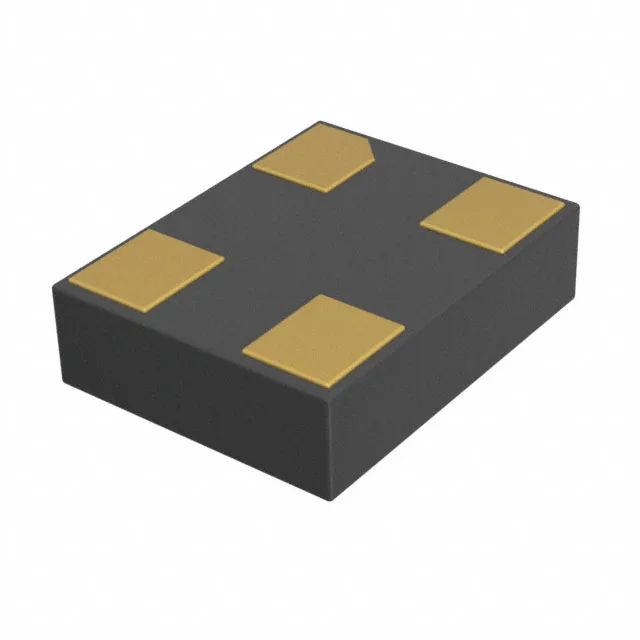
Microchip Technology DSC6003MI3B-026.0000T — Crystals & Oscillators

DSC6003MI3B-026.0000T MEMS XO – 26 MHz, AEC-Q100, ±20 ppm

MPNDSC6003MI3B-026.0000T
Active

Microchip Technology DSC6003MI3B-026.0000T, XO (Standard), 26 MHz CMOS output, ±20 ppm stability, AEC-Q100 qualified, 4-VFLGA package.

Sourced new & surplus through independent channelsAuthenticity-screened · ESD-safe packingListing updated Aug 2026

Specifications

DSC6003MI3B-026.0000T specifications
ParameterValue
TypeXO (Standard)
SeriesDSC60XXB
MountingSurface Mount
Voltage1.71V ~ 3.63V
Current - supply1.3mA (Typ)
Frequency26 MHz
Frequency stability±20ppm
Operating temperature-40°C ~ 85°C
Size (Dimension)0.079\" L x 0.063\" W (2.00mm x 1.60mm)
Height - seated0.035\" (0.89mm)
OutputCMOS
PackageTape & Reel (TR)
RatingsAEC-Q100
FunctionEnable/Disable
Base resonatorMEMS
Case4-VFLGA

Product details

The DSC6003MI3B-026.0000T is a MEMS-based XO from Microchip's DSC60XXB series, delivering a fixed 26 MHz CMOS output with ±20 ppm frequency stability across the full -40 to +85°C industrial temperature range.

Package and supply compatibility

Housed in a 4-VFLGA package measuring 2.00 mm x 1.60 mm with a seated height of 0.89 mm — a compact footprint that fits tight ECU layouts and multi-layer boards. Supply voltage spans 1.71 V to 3.63 V, so it runs directly from a 1.8 V or 3.3 V rail without an intermediate LDO — one less component in the power tree. Surface-mount assembly; the 4-pad VFLGA requires a standard reflow profile — no special handling beyond the usual MSL precautions.

Lifecycle and sourcing status

No official successor or second-source listed; the DSC60XXB series is the current active family.

Frequently asked questions

What is the frequency stability of DSC6003MI3B-026.0000T?

±20 ppm over the -40 to +85°C temperature range. This holds the 26 MHz output within tight tolerance for automotive CAN, Ethernet, or MCU clock trees without external trimming.

Is DSC6003MI3B-026.0000T AEC-Q100 qualified?

Yes, it carries AEC-Q100 ratings, making it suitable for automotive applications where reliability screening is required — engine bay, cabin, or chassis domains.