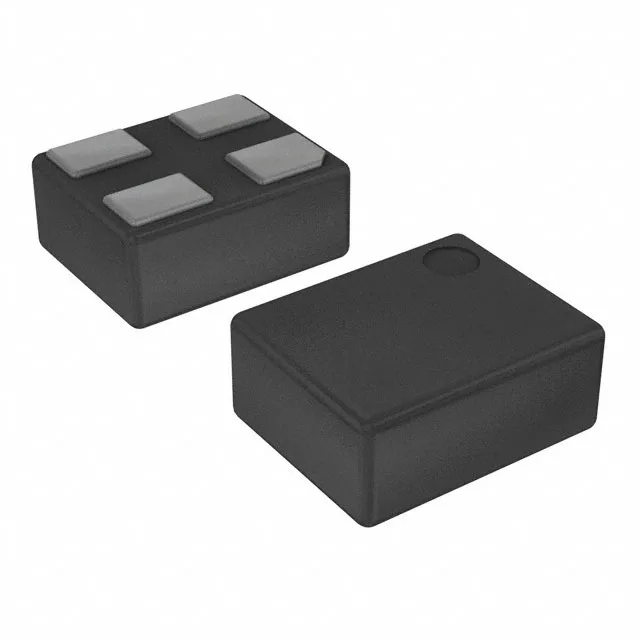
Microchip Technology DSC6003ME1B-013.1072T — Crystals & Oscillators

DSC6003ME1B-013.1072T MEMS XO – 13.1072 MHz, AEC-Q100

MPNDSC6003ME1B-013.1072T
Active

Microchip DSC6003ME1B-013.1072T, a 13.1072 MHz MEMS-based XO (Standard) with CMOS output, ±50 ppm stability, 1.71V–3.63V supply, AEC-Q100 qualified, in a 2.00mm x 1.60mm 4-VFLGA package.

Sourced new & surplus through independent channelsAuthenticity-screened · ESD-safe packingListing updated Aug 2026

Specifications

DSC6003ME1B-013.1072T specifications
ParameterValue
TypeXO (Standard)
SeriesDSC60XXB
MountingSurface Mount
Voltage1.71V ~ 3.63V
Current - supply1.3mA (Typ)
Frequency13.1072 MHz
Frequency stability±50ppm
Operating temperature-20°C~70°C
Size (Dimension)0.079\" L x 0.063\" W (2.00mm x 1.60mm)
Height - seated0.035\" (0.89mm)
OutputCMOS
PackageTape & Reel (TR)
RatingsAEC-Q100
FunctionEnable/Disable
Base resonatorMEMS
Case4-VFLGA

Product details

The DSC6003ME1B-013.1072T is a 13.1072 MHz MEMS-based XO (Standard) from Microchip's DSC60XXB series, delivering a CMOS output with enable/disable function. Its AEC-Q100 qualification makes it suitable for automotive ECUs, ADAS sensors, and infotainment modules where quartz oscillators may be too fragile under vibration or have longer lead times.

Operating from 1.71V to 3.63V, this oscillator spans 1.8V, 2.5V, and 3.3V logic rails without a separate level translator — a single BOM line covers multiple voltage domains. Typical current draw is 1.3 mA max, which keeps the thermal contribution negligible in the 4-VFLGA package.

It fits indoor automotive cabin modules, consumer electronics, and office equipment. For engine-bay or outdoor telecom applications, a -40°C to 85°C variant from the same DSC60XXB family would be required.

Frequently asked questions

Is DSC6003ME1B-013.1072T AEC-Q100 qualified?

Yes, the DSC6003ME1B-013.1072T carries AEC-Q100 qualification, meaning it has passed automotive-grade reliability stress tests including temperature cycling, ESD, and latch-up. This qualifies it for use in automotive ECUs and modules, though the -20°C to 70°C temperature range limits deployment to cabin or controlled environments rather than under-hood.