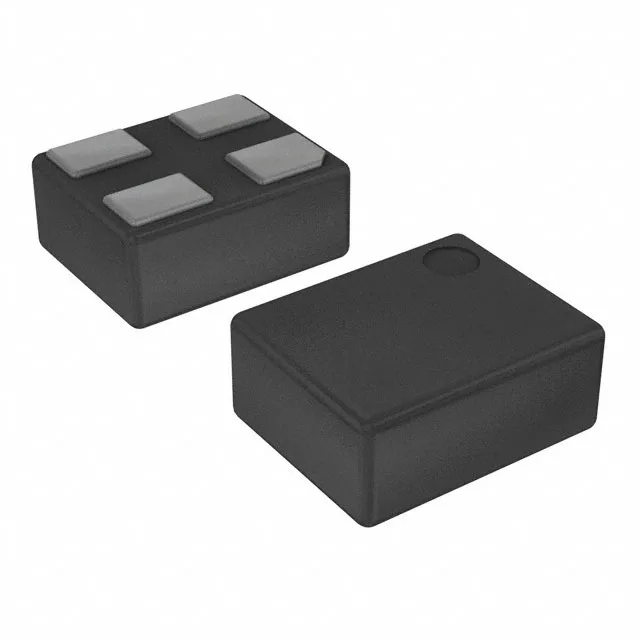
Microchip Technology DSC6003MA3B-PROGT — Crystals & Oscillators

DSC6003MA3B-PROGT MEMS XO – AEC-Q100, 2 kHz–80 MHz, CMOS

MPNDSC6003MA3B-PROGT
Active

Microchip DSC6003MA3B-PROGT, DSC60XXB series, XO (Standard) with MEMS resonator, CMOS output, 1.71–3.63 V supply, –40 to 125°C, AEC-Q100, blank (user-programmable) frequency range 2 kHz to 80 MHz

$1.6600Ref. price · indicative, final on quote
Independent supplier — new & surplus stockAuthenticity-screened · ESD-safe packingListing updated Aug 2026

Specifications

DSC6003MA3B-PROGT specifications
ParameterValue
TypeXO (Standard)
SeriesDSC60XXB
MountingSurface Mount
Programmable typeBlank (User Must Program)
Supply voltage1.71V ~ 3.63V
Current - supply1.3mA (Typ)
Available frequency range2 kHz ~ 80 MHz
Frequency stability (Total)±20ppm
Operating temperature-40°C~125°C
Size (Dimension)0.079\" L x 0.063\" W (2.00mm x 1.60mm)
Height - seated0.035\" (0.89mm)
OutputCMOS
PackageTape & Reel (TR); Cut Tape (CT)
RatingsAEC-Q100
FunctionEnable/Disable
Base resonatorMEMS
Case4-VFLGA

Product details

Rated for –40 to 125°C and AEC-Q100 qualified, it suits under-hood automotive modules, outdoor industrial controllers, and any environment where a quartz crystal's vibration or temperature sensitivity is a concern.

Programmable frequency with low power footprint

Supplied blank (user must program), the part accepts any frequency in the 2 kHz to 80 MHz range via Microchip's programming tools — no need to stock multiple fixed-frequency oscillators. Maximum supply current is 1.3 mA typical, keeping the thermal budget low even in dense 4-VFLGA (2.00 mm x 1.60 mm) layouts. Operating from 1.71 V to 3.63 V, it bridges 1.8 V and 3.3 V logic domains without an external level translator.

Frequently asked questions

How is the DSC6003MA3B-PROGT programmed, and what tools are needed?

The device ships blank (user-programmable). Microchip provides a programming toolchain — typically the TimeFlash Field Programmer or a compatible in-system programmer — to set the output frequency within the 2 kHz to 80 MHz range. The Enable/Disable pin function is fixed; no additional configuration is required.