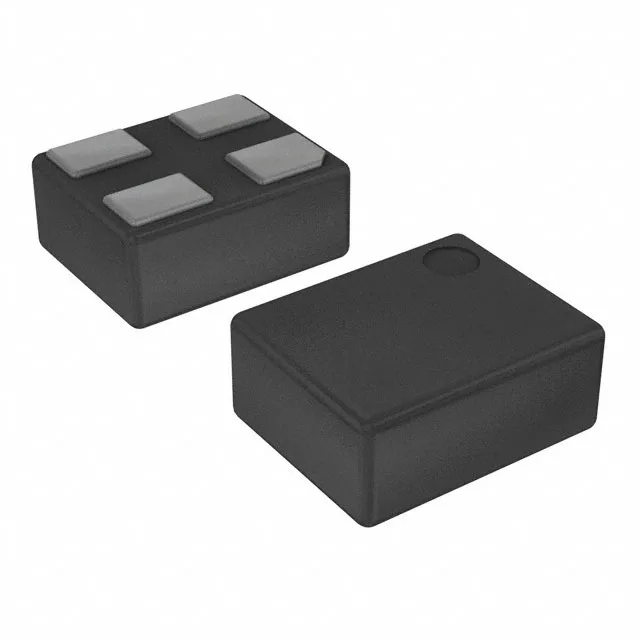
Microchip Technology DSC6003MA3B-032.0000T — Crystals & Oscillators

DSC6003MA3B-032.0000T MEMS XO 32 MHz AEC-Q100 - Microchip

MPNDSC6003MA3B-032.0000T
Active

Microchip Technology DSC60XXB series, XO (Standard) MEMS oscillator, 32 MHz, CMOS output, 1.71V~3.63V supply, ±20ppm stability, -40°C~125°C, AEC-Q100, 4-VFLGA package.

Independent supplier — new & surplus stockAuthenticity-screened · ESD-safe packingListing updated Aug 2026

Specifications

DSC6003MA3B-032.0000T specifications
ParameterValue
TypeXO (Standard)
SeriesDSC60XXB
MountingSurface Mount
Supply voltage1.71V ~ 3.63V
Current - supply1.3mA (Typ)
Frequency32 MHz
Frequency stability±20ppm
Operating temperature-40°C~125°C
Size (Dimension)0.079\" L x 0.063\" W (2.00mm x 1.60mm)
Height - seated0.035\" (0.89mm)
OutputCMOS
PackageTape & Reel (TR)
RatingsAEC-Q100
FunctionEnable/Disable
Base resonatorMEMS
Case4-VFLGA

Product details

The DSC6003MA3B-032.0000T is a 32 MHz MEMS-based XO (Standard) oscillator from Microchip's DSC60XXB series, delivering CMOS output across a 1.71V to 3.63V supply range.

MEMS resonator vs quartz: what the temp range buys

At 125°C, a quartz oscillator's frequency can shift by tens of ppm due to crystal stress relaxation; the MEMS structure holds ±20ppm without a separate temperature-compensation circuit. This matters for CAN FD and 100BASE-T1 PHY clocking where bit-timing margin shrinks at high temperature.

The 4-VFLGA package is moisture-sensitive — store the reels dry per J-STD-020.

Housed in a 4-VFLGA package measuring 2.00mm x 1.60mm with a seated height of 0.89mm. The 0.50mm pitch LGA footprint requires a solder-paste stencil with 0.25mm apertures for reliable fillet formation.

Frequently asked questions

Is DSC6003MA3B-032.0000T AEC-Q100 qualified?

Yes, it carries AEC-Q100 qualification, which includes the -40°C to 125°C operating temperature grade and the reliability stress tests required for automotive-grade ICs.

Can DSC6003MA3B-032.0000T replace a standard crystal oscillator?

It can replace a quartz crystal + load-capacitor pair in a CMOS-compatible clock input, provided the downstream device accepts a full-swing CMOS clock and the 32 MHz frequency matches. The MEMS oscillator eliminates the need for external load capacitors and startup time, but the Enable/Disable pin must be handled — if left floating, the output may be disabled. Tie the pin high through a 10kΩ resistor to VDD if the function is unused.