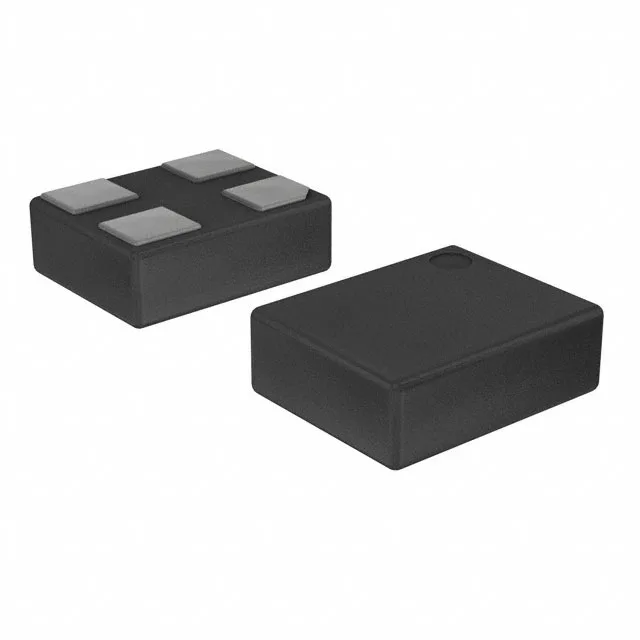
Microchip Technology DSC6003JI2B-024.0000 — Crystals & Oscillators

DSC6003JI2B-024.0000 MEMS XO 24 MHz AEC-Q100 – Microchip

MPNDSC6003JI2B-024.0000
Active

Microchip DSC60XXB series MEMS XO, 24.0000 MHz, CMOS output, ±25 ppm stability, AEC-Q100 qualified, 4-VLGA package, -40°C to 85°C.

Sourced new & surplus through independent channelsAuthenticity-screened · ESD-safe packingListing updated Aug 2026

Specifications

DSC6003JI2B-024.0000 specifications
ParameterValue
TypeXO (Standard)
SeriesDSC60XXB
MountingSurface Mount
Voltage1.71V ~ 3.63V
Current - supply1.3mA (Typ)
Frequency24 MHz
Frequency stability±25ppm
Operating temperature-40°C~85°C
Size (Dimension)0.098\" L x 0.079\" W (2.50mm x 2.00mm)
Height - seated0.035\" (0.89mm)
OutputCMOS
PackageTube
RatingsAEC-Q100
FunctionEnable/Disable
Base resonatorMEMS
Case4-VLGA

Product details

Active production, AEC-Q100 qualified MEMS oscillator

The DSC6003JI2B-024.0000 is an active-production MEMS-based XO (standard) from Microchip's DSC60XXB series, delivering a 24 MHz CMOS output with ±25 ppm frequency stability. The wide supply range (1.71V to 3.63V) lets it run directly from a 1.8V or 3.3V rail without an extra LDO, and the Enable/Disable function lets the system shut the clock off during sleep modes to save power.

Package, footprint, and board-level fit

Housed in a 4-VLGA package measuring 2.50 mm x 2.00 mm with a seated height of 0.89 mm, this oscillator fits tight PCB layouts where a crystal plus load caps would take up more real estate. The MEMS base resonator means no quartz crystal — it's inherently more shock- and vibration-tolerant, which matters for automotive and portable applications.

Frequently asked questions

Is the DSC6003JI2B-024.0000 AEC-Q100 automotive qualified?

Yes, it carries an AEC-Q100 rating, meaning it has passed automotive-grade reliability stress tests and is suitable for use in vehicle electronics.

What is the frequency and output type of the DSC6003JI2B-024.0000?

It outputs a 24 MHz CMOS clock signal with ±25 ppm frequency stability, making it a direct drop-in for MCU clock inputs that expect a CMOS-level square wave.