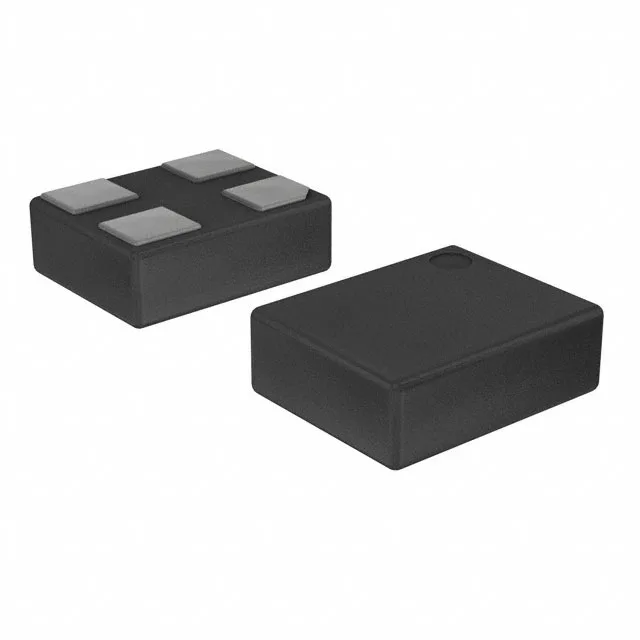
Microchip Technology DSC6003JI2B-012.0000 — Crystals & Oscillators

DSC6003JI2B-012.0000 MEMS Oscillator 12 MHz AEC-Q100 XO

MPNDSC6003JI2B-012.0000
Active

Microchip Technology DSC60XXB series, XO (Standard), 12 MHz CMOS output, AEC-Q100 qualified, 4-VLGA package, -40°C to 85°C, 1.8V to 3.3V supply.

Sourced new & surplus through independent channelsAuthenticity-screened · ESD-safe packingListing updated Aug 2026

Specifications

DSC6003JI2B-012.0000 specifications
ParameterValue
TypeXO (Standard)
SeriesDSC60XXB
MountingSurface Mount
Voltage1.8V ~ 3.3V
Current - supply1.3mA (Typ)
Frequency12 MHz
Operating temperature-40°C~85°C
Size (Dimension)0.098\" L x 0.079\" W (2.50mm x 2.00mm)
Height - seated0.035\" (0.89mm)
OutputCMOS
PackageTube
RatingsAEC-Q100
FunctionEnable/Disable
Base resonatorMEMS
Case4-VLGA
Absolute pull range±25ppm

Product details

It outputs a CMOS-level clock at 12 MHz, making it a direct drop-in for MCU or SoC reference clocks that expect a standard 12 MHz input. The MEMS resonator eliminates the quartz-crystal cold-start jitter and microphonics concerns common in ceramic-packaged crystals.

Supply flexibility and enable/disable control

The device accepts a 1.8V to 3.3V supply range, so a single BOM line covers 1.8V, 2.5V, or 3.3V logic rails without a separate voltage regulator or level translator. Absolute pull range is ±25 ppm, which sets the frequency stability over voltage and temperature. For a 12 MHz clock, that is ±300 Hz total drift — well within the tolerance for a CAN controller or USB full-speed PHY.

Housed in a 4-VLGA package measuring 2.50 mm x 2.00 mm with a seated height of 0.89 mm, the DSC6003JI2B-012.0000 fits small-form-factor PCBs common in ECU modules and sensor nodes. The surface-mount footprint requires a standard 4-pad layout — no special routing beyond a decoupling cap near the supply pin.

Frequently asked questions

Is DSC6003JI2B-012.0000 AEC-Q100 qualified?

Yes, the device carries AEC-Q100 ratings. This qualification covers the -40°C to 85°C temperature range and includes the stress tests (preconditioning, temperature cycling, ESD) required for automotive-grade components. It is suitable for under-hood and cabin electronics that require PPAP documentation.