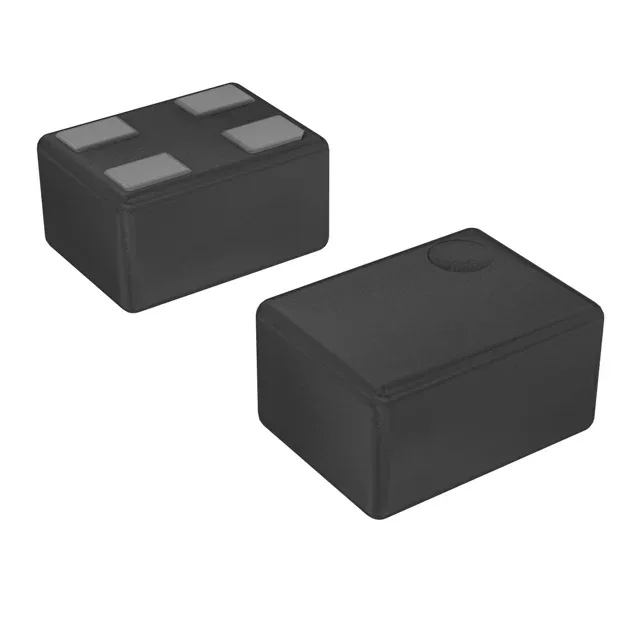
It operates from a 1.71 V to 3.63 V supply and draws 1.3 mA typical, making it suited for low-power clocking in automotive body electronics, infotainment, or ADAS sensor modules where the -20°C to 70°C ambient covers the passenger cabin. The 4-SMD no-lead package measures 1.60 mm x 1.20 mm with a seated height of 0.89 mm, fitting space-constrained boards typical of compact camera modules or keyless-entry transceivers.
Obsolete status and sourcing reality
A board-spin migration to a current Microchip MEMS oscillator (e.g., the DSC60XXB series) is the recommended path for new designs, though pin-compatibility should be verified against the original footprint.
AEC-Q100 and temperature grade fit
The AEC-Q100 qualification means this oscillator passed automotive-grade stress tests (preconditioning, temperature cycling, ESD), but the -20°C to 70°C operating range limits it to cabin or climate-controlled compartments — not under-hood or engine-bay locations where -40°C to 125°C parts are required. The ±25 ppm total frequency stability includes initial tolerance, temperature drift, and aging, which is adequate for CAN, LIN, and most MCU clock trees but may not meet the tighter ±10 ppm needed for high-speed USB or Ethernet PHY reference clocks.