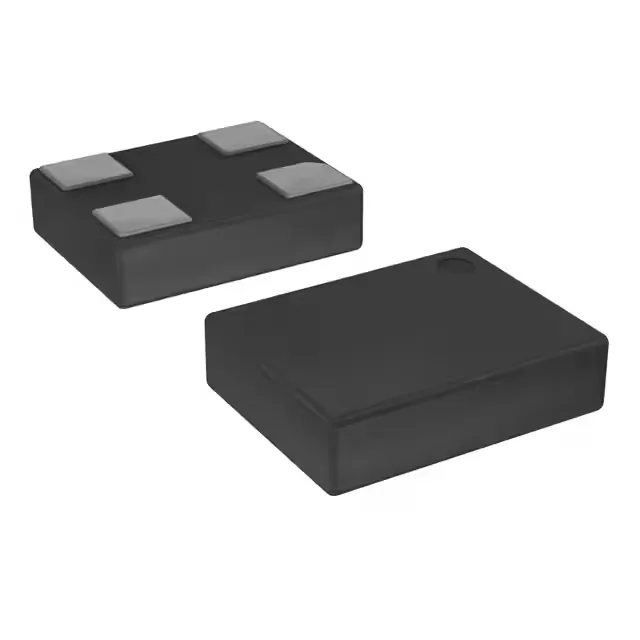
Microchip Technology DSC6003CE2A-PROGRAMMABLE — Crystals & Oscillators

DSC6003CE2A-PROGRAMMABLE MEMS XO – Microchip, Obsolete

MPNDSC6003CE2A-PROGRAMMABLE
Obsolete

Microchip DSC60XX series, XO (Standard), CMOS output, 1 MHz to 80 MHz programmable, AEC-Q100, 4-SMD no-lead package

$7.3500Ref. price · indicative, final on quote
Independent supplier — new & surplus stockAuthenticity-screened · ESD-safe packingListing updated Jul 2026

Specifications

DSC6003CE2A-PROGRAMMABLE specifications
ParameterValue
TypeXO (Standard)
SeriesDSC60XX
MountingSurface Mount
Supply voltage1.71V ~ 3.63V
Current - supply1.3mA (Typ)
Available frequency range1 MHz ~ 80 MHz
Frequency stability (Total)±25ppm
Operating temperature-20°C~70°C
Size (Dimension)0.126\" L x 0.098\" W (3.20mm x 2.50mm)
Height - seated0.035\" (0.90mm)
OutputCMOS
PackageBulk
RatingsAEC-Q100
FunctionEnable/Disable
Base resonatorMEMS
Case4-SMD, No Lead

Product details

The 1.71V to 3.63V supply range and 1.3 mA typical current draw suit low-power clock trees in body controllers or sensor interfaces.

Obsolete – sourcing and replacement path

No official successor or pin-compatible alternative is listed in the DSC60XX series evidence. For existing designs, last-time-buy or surplus-channel procurement is the only option. A board spin to a current Microchip MEMS oscillator (e.g., DSC61XX or DSC1000 series) may be required for new production.

Housed in a 4-SMD, no-lead package measuring 3.20 mm x 2.50 mm with a seated height of 0.90 mm, the footprint is standard for small-form-factor clock sources.

Frequently asked questions

What is the replacement for DSC6003CE2A-PROGRAMMABLE?

Microchip has not published a direct pin-compatible replacement within the DSC60XX series. For new designs, consider the DSC61XX or DSC1000 series MEMS oscillators, which offer similar frequency ranges and AEC-Q100 options, though a PCB layout review is needed. For existing BOMs, surplus stock is the primary channel.

What is the frequency stability of this oscillator?

Total frequency stability is ±25 ppm, which includes initial tolerance, temperature drift, and aging over the -20°C to 70°C range.