Microchip Technology DSC6001JI3B-004K280 — Crystals & Oscillators

DSC6001JI3B-004K280 MEMS XO – 4.28 kHz, AEC-Q100

MPNDSC6001JI3B-004K280
Active

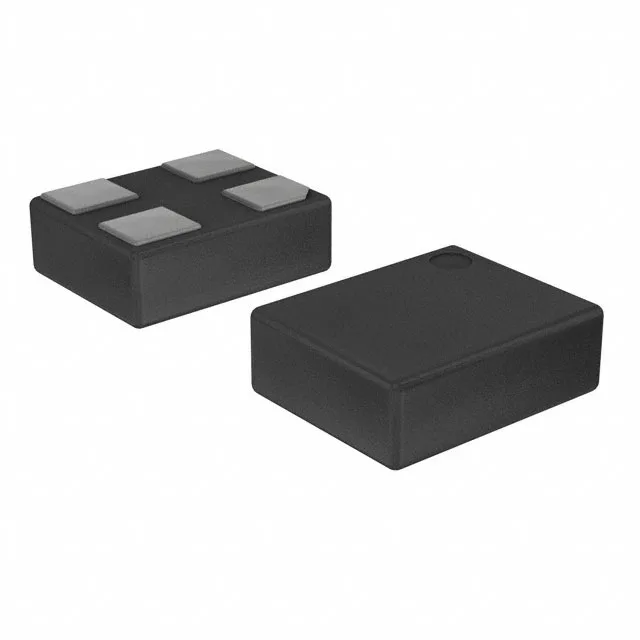
Microchip DSC6001JI3B-004K280, DSC60XXB series, XO (Standard) MEMS oscillator, 4.28 kHz CMOS output, 1.8V–3.3V supply, ±20 ppm stability, AEC-Q100, -40°C to +85°C, 4-VLGA package

Independent supplier — new & surplus stockAuthenticity-screened · ESD-safe packingListing updated Aug 2026

Specifications

DSC6001JI3B-004K280 specifications
ParameterValue
TypeXO (Standard)
SeriesDSC60XXB
MountingSurface Mount
Supply voltage1.8V ~ 3.3V
Current - supply1.3mA (Typ)
Frequency4.28 kHz
Frequency stability±20ppm
Operating temperature-40°C~85°C
Size (Dimension)0.098\" L x 0.079\" W (2.50mm x 2.00mm)
Height - seated0.035\" (0.89mm)
OutputCMOS
PackageTube
RatingsAEC-Q100
FunctionEnable/Disable
Base resonatorMEMS
Case4-VLGA

Product details

Why a 4.28 kHz MEMS oscillator exists

Most crystal oscillators bottom out around 32 kHz for real-time clocks. The output is standard CMOS, so it drives a logic input pin directly — no level translation or sine-to-square conditioning needed. Supply voltage spans 1.8V to 3.3V, covering both 1.8V-core and 3.3V-I/O domains on the same BOM line.

Automotive-grade timing for harsh environments

That qualifies it for under-hood and cabin modules where a commercial-grade oscillator would drift or fail. Frequency stability is ±20 ppm across that range, which is tighter than many quartz XOs at this price point.

Housed in a 4-VLGA package measuring 2.50 mm x 2.00 mm with a seated height of 0.89 mm.

Frequently asked questions

Is DSC6001JI3B-004K280 AEC-Q100 qualified?

Yes, the DSC6001JI3B-004K280 carries AEC-Q100 qualification, covering the full automotive reliability test regimen. This makes it suitable for deployment in engine control, body electronics, and ADAS modules.

Can the DSC6001JI3B-004K280 replace a quartz oscillator in an existing design?

The 4-VLGA package and CMOS output are common to many small-form-factor oscillators, so a layout swap is often possible. However, verify the pinout and enable polarity against your current quartz oscillator's datasheet — MEMS oscillators sometimes swap the enable and ground pins. The supply range (1.8V–3.3V) covers most logic rails.