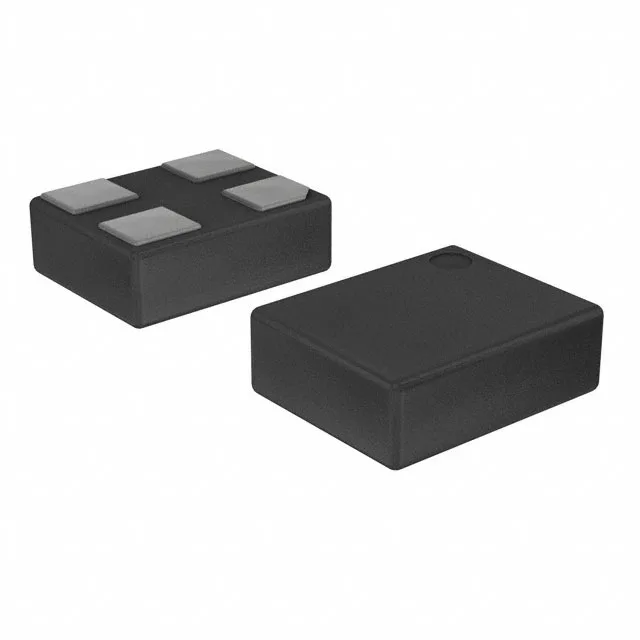
Microchip Technology DSC6001JI2B-027.0000 — Crystals & Oscillators

DSC6001JI2B-027.0000 Microchip MEMS XO, 27 MHz, AEC-Q100

MPNDSC6001JI2B-027.0000
Active

Microchip Technology DSC60XXB series, XO (Standard) MEMS oscillator, 27 MHz, CMOS output, 1.8V–3.3V supply, AEC-Q100, 4-VLGA package

Independent supplier — new & surplus stockAuthenticity-screened · ESD-safe packingListing updated Aug 2026

Specifications

DSC6001JI2B-027.0000 specifications
ParameterValue
TypeXO (Standard)
SeriesDSC60XXB
MountingSurface Mount
Supply voltage1.8V ~ 3.3V
Current - supply1.3mA (Typ)
Frequency27 MHz
Operating temperature-40°C~85°C
Size (Dimension)0.098\" L x 0.079\" W (2.50mm x 2.00mm)
Height - seated0.035\" (0.89mm)
OutputCMOS
PackageTube
RatingsAEC-Q100
FunctionEnable/Disable
Base resonatorMEMS
Case4-VLGA
Absolute pull range±25ppm

Product details

The DSC6001JI2B-027.0000 is a 27 MHz MEMS-based XO (Standard) oscillator from Microchip's DSC60XXB series, delivering a CMOS output over a 1.8V–3.3V supply range. The 4-VLGA package (2.50mm x 2.00mm, 0.89mm seated height) is a standard 4-pin land-grid array — the same footprint as many quartz oscillators, so a board layout already designed for a 4-pin XO often accepts this MEMS drop-in.

Sourcing reality: active, quoted to order

27 MHz is a common clock for MCUs and CAN controllers — the ±25 ppm APR holds the frequency steady across temperature and aging, so the CAN bus bit timing stays within tolerance. Supply range 1.8V–3.3V covers both 1.8V-core processors and 3.3V peripheral buses without a level translator or extra regulator.

Frequently asked questions

Is DSC6001JI2B-027.0000 AEC-Q100 qualified?

Yes, it carries AEC-Q100 rating, meaning it passes automotive-grade reliability stress and temperature qualification for -40°C to 85°C ambient.

What is the exact frequency of DSC6001JI2B-027.0000?

27 MHz, with ±25 ppm absolute pull range.

Is DSC6001JI2B-027.0000 pin-compatible with other 4-pin oscillators?

The 4-VLGA package uses the same 4-pin land pattern as many standard quartz oscillators — confirm the pin 1 orientation and enable polarity against your existing footprint, but the mechanical outline is a common drop-in.