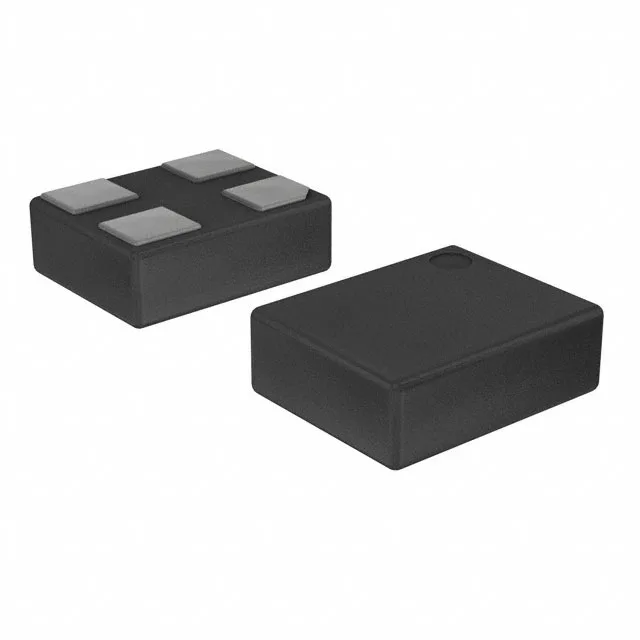
Microchip Technology DSC6001JI2A-027.0000T — Crystals & Oscillators

DSC6001JI2A-027.0000T MEMS XO 27 MHz CMOS AEC-Q100 Obsolete

MPNDSC6001JI2A-027.0000T
Obsolete

Microchip DSC60XX series MEMS XO, 27 MHz, CMOS output, ±25ppm stability, AEC-Q100 qualified, 4-SMD no-lead package, obsolete status

Sourced new & surplus through independent channelsAuthenticity-screened · ESD-safe packingListing updated Jul 2026

Specifications

DSC6001JI2A-027.0000T specifications
ParameterValue
TypeXO (Standard)
SeriesDSC60XX
MountingSurface Mount
Voltage1.71V ~ 3.63V
Current - supply1.3mA (Typ)
Frequency27 MHz
Frequency stability±25ppm
Operating temperature-40°C~85°C
Size (Dimension)0.098\" L x 0.079\" W (2.50mm x 2.00mm)
Height - seated0.035\" (0.89mm)
OutputCMOS
PackageTape & Reel (TR)
RatingsAEC-Q100
FunctionEnable/Disable
Base resonatorMEMS
Case4-SMD, No Lead

Product details

MEMS oscillator for automotive timing

The DSC6001JI2A-027.0000T is a 27 MHz MEMS-based XO (Standard) from Microchip's DSC60XX series, delivering CMOS output with ±25ppm frequency stability across -40°C to +85°C. AEC-Q100 qualified, this part was designed for automotive-grade applications where a quartz crystal's shock and vibration limitations are a concern — the MEMS resonator is inherently more robust under those conditions.

Supply voltage and power budget

Operates from a 1.71V to 3.63V supply rail, covering 1.8V, 2.5V, and 3.3V logic domains without a separate regulator. Maximum supply current is 1.3 mA typical — a low-power clock source for battery-backed or thermally constrained boards.

Housed in a 4-SMD, No Lead package measuring 2.50mm x 2.00mm with a seated height of 0.89mm — a compact footprint for space-limited automotive ECUs or portable equipment.

For existing BOM lines, availability is limited to surplus or remaining distributor inventory; quantities are lot-specific and confirmed at RFQ.

Frequently asked questions

Is DSC6001JI2A-027.0000T AEC-Q100 qualified?

Yes, the part carries AEC-Q100 qualification, meaning it passed automotive-grade reliability stress tests including temperature cycling, ESD, and latch-up. It was originally intended for under-hood or cabin automotive electronics operating from -40°C to +85°C.