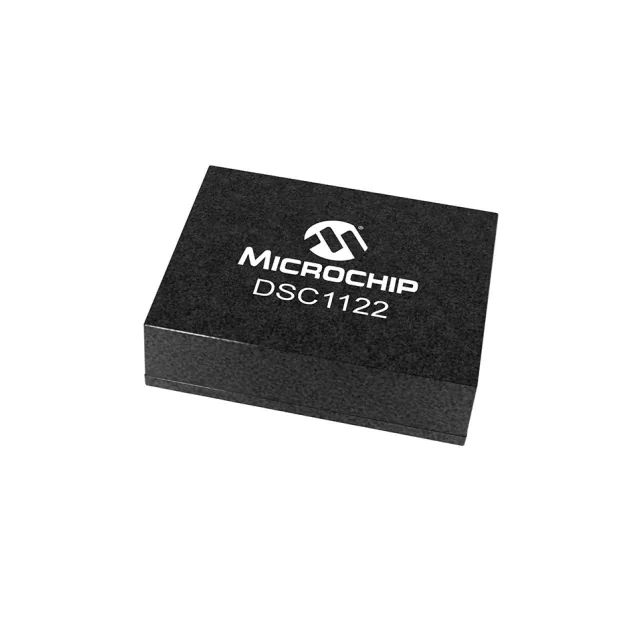
Microchip Technology DSC6001JI1B-033.3333 — Crystals & Oscillators

DSC6001JI1B-033.3333 – 33.3333 MHz MEMS XO, CMOS, AEC-Q100

MPNDSC6001JI1B-033.3333
Active

Microchip DSC6001JI1B-033.3333, XO (Standard), 33.3333 MHz, CMOS output, ±50 ppm stability, 1.8V to 3.3V supply, AEC-Q100, -40 to 85°C, 4-VLGA surface-mount.

Independent supplier — new & surplus stockAuthenticity-screened · ESD-safe packingListing updated Aug 2026

Specifications

DSC6001JI1B-033.3333 specifications
ParameterValue
TypeXO (Standard)
SeriesDSC60XXB
MountingSurface Mount
Supply voltage1.8V ~ 3.3V
Current - supply1.3mA (Typ)
Frequency33.3333 MHz
Frequency stability±50ppm
Operating temperature-40°C ~ 85°C
Size (Dimension)0.098\" L x 0.079\" W (2.50mm x 2.00mm)
Height - seated0.035\" (0.89mm)
OutputCMOS
PackageTube
RatingsAEC-Q100
FunctionEnable/Disable
Base resonatorMEMS
Case4-VLGA

Product details

33.3333 MHz MEMS clock with CMOS drive

It delivers a 33.3333 MHz clock — a common frequency for Ethernet PHYs, USB controllers, and MCU system clocks — with ±50 ppm stability across the full -40 to 85°C industrial range. The 1.8V to 3.3V supply range lets it run directly from a 1.8V core rail or a 3.3V I/O rail without an external regulator or level translator. Typical current draw is 1.3 mA, making it suitable for power-sensitive designs like automotive ECUs or battery-backed telematics modules.

Automotive and industrial deployment

The ±50 ppm stability ensures CAN bus or FlexRay timing margins hold over temperature. The 4-VLGA package (2.50 x 2.00 mm, 0.89 mm seated height) is a compact land-grid array.

Status is Active — no NRND or EOL notice.

Frequently asked questions

Is the DSC6001JI1B-033.3333 compatible with 3.3V logic?

Yes. The supply voltage range is 1.8V to 3.3V, and the output is CMOS. At 3.3V supply the output swings rail-to-rail, directly driving 3.3V CMOS inputs without a level translator.

What is the frequency stability of the DSC6001JI1B-033.3333?

±50 ppm across the -40 to 85°C operating temperature range. This includes initial tolerance, temperature drift, and supply-voltage sensitivity.