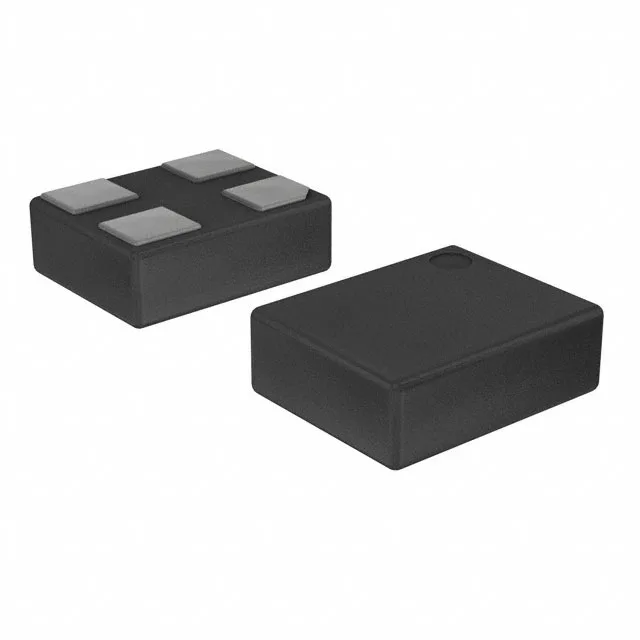
Microchip Technology DSC6001JE3B-040K000 — Crystals & Oscillators

DSC6001JE3B-040K000 MEMS XO – 40 kHz, AEC-Q100, CMOS Output

MPNDSC6001JE3B-040K000
Active

Microchip Technology DSC6001JE3B-040K000, XO (Standard) MEMS oscillator, 40 kHz CMOS output, ±20 ppm stability, 1.71V–3.63V supply, AEC-Q100, 4-VLGA package

Sourced new & surplus through independent channelsAuthenticity-screened · ESD-safe packingListing updated Aug 2026

Specifications

DSC6001JE3B-040K000 specifications
ParameterValue
TypeXO (Standard)
SeriesDSC60XXB
MountingSurface Mount
Voltage1.71V ~ 3.63V
Current - supply1.3mA (Typ)
Frequency40 kHz
Frequency stability±20ppm
Operating temperature-20°C~70°C
Size (Dimension)0.098\" L x 0.079\" W (2.50mm x 2.00mm)
Height - seated0.035\" (0.89mm)
OutputCMOS
PackageTube
RatingsAEC-Q100
FunctionEnable/Disable
Base resonatorMEMS
Case4-VLGA

Product details

MEMS oscillator for low-frequency automotive timing

Rated AEC-Q100, this part targets automotive applications that require a low-frequency reference — such as wake-up timers, watchdog clocks, or CAN bus keep-alive — where a quartz crystal's shock sensitivity or size would be a liability. The 4-VLGA package (2.50 mm × 2.00 mm) and wide supply range of 1.71 V to 3.63 V let it drop into a 1.8 V or 3.3 V domain without a level translator.

AEC-Q100 qualification covers the reliability stress and PPAP requirements, but the thermal envelope limits this part to cabin or climate-controlled modules, not under-hood or engine-bay ECUs. For a 40 kHz reference, the ±20 ppm stability translates to roughly ±0.8 Hz drift across temperature — well within the tolerance of a low-speed wake-up timer or a CAN bus bit-time calibration.

Enable/Disable function and power budget

Frequently asked questions

Is DSC6001JE3B-040K000 AEC-Q100 qualified?

Yes, the DSC6001JE3B-040K000 carries an AEC-Q100 rating, covering the automotive-grade reliability stress and PPAP documentation. Note that the operating temperature range is -20°C to +70°C, so the qualification applies to the cabin or climate-controlled domain, not the full -40°C to +125°C under-hood band.