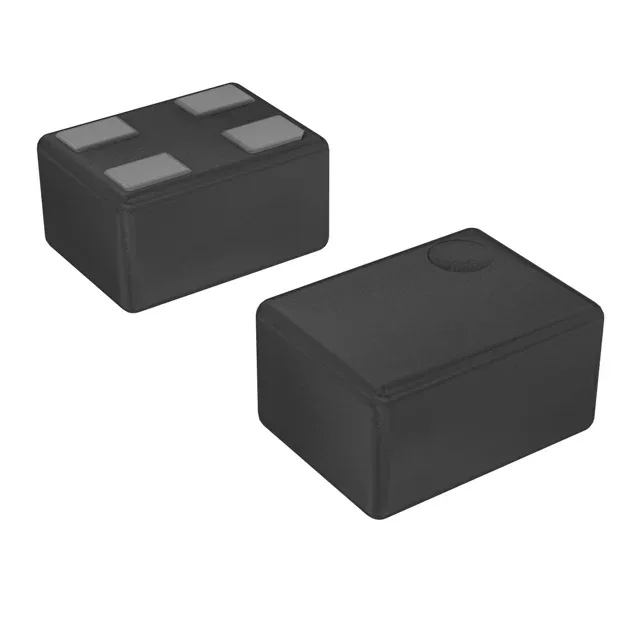
Microchip Technology DSC6001HI2A-016.0000T — Crystals & Oscillators

DSC6001HI2A-016.0000T MEMS XO 16 MHz CMOS AEC-Q100 Obsolete

MPNDSC6001HI2A-016.0000T
Obsolete

Microchip Technology DSC60XX series MEMS XO, 16 MHz, CMOS output, ±25 ppm stability, 1.71V–3.63V supply, AEC-Q100, 4-SMD no-lead package.

Independent supplier — new & surplus stockAuthenticity-screened · ESD-safe packingListing updated Jul 2026

Specifications

DSC6001HI2A-016.0000T specifications
ParameterValue
TypeXO (Standard)
SeriesDSC60XX
MountingSurface Mount
Supply voltage1.71V ~ 3.63V
Current - supply1.3mA (Typ)
Frequency16 MHz
Frequency stability±25ppm
Operating temperature-40°C~85°C
Size (Dimension)0.063\" L x 0.047\" W (1.60mm x 1.20mm)
Height - seated0.035\" (0.89mm)
OutputCMOS
PackageTape & Reel (TR)
RatingsAEC-Q100
FunctionEnable/Disable
Base resonatorMEMS
Case4-SMD, No Lead

Product details

MEMS oscillator with automotive-grade stability

The DSC6001HI2A-016.0000T is a 16 MHz MEMS-based XO from Microchip's DSC60XX series, delivering CMOS output with ±25 ppm frequency stability across a 1.71V to 3.63V supply range.

Microchip lists the DSC6001HI2A-016.0000T as Obsolete. Because the DSC60XX series shares the same footprint and supply voltage range, a functionally equivalent MEMS oscillator from the same family may be a drop-in candidate, but the exact order code is discontinued.

Housed in a no-lead package measuring 1.60 mm x 1.20 mm with a seated height of 0.89 mm, this oscillator fits tight PCB real estate — common in automotive sensor modules or compact control units.

Frequently asked questions

Is the DSC6001HI2A-016.0000T obsolete?

Yes, Microchip lists this part as Obsolete. It is not recommended for new designs. For existing production, we can source it through independent surplus channels — confirm availability and pricing at RFQ.

What is the replacement for DSC6001HI2A-016.0000T?

No official successor is documented. A functionally equivalent MEMS oscillator from the same DSC60XX family (same package, supply range, and CMOS output) may serve as a cross-reference, but the exact order code is discontinued. Check the frequency, stability, and enable function against your BOM before substituting.

What does the Enable/Disable function do on this oscillator?

The Enable/Disable pin allows the output to be tri-stated (high-impedance) when pulled low, reducing supply current from the typical 1.3 mA to near zero. This is useful for power-gating the clock in battery-powered or sleep-mode automotive modules.