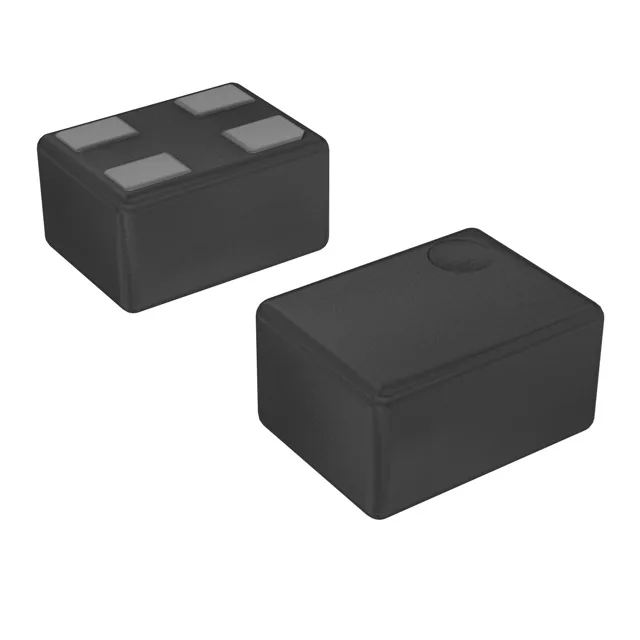
Microchip Technology DSC6001HE3B-027.1200T — Crystals & Oscillators

DSC6001HE3B-027.1200T MEMS XO 27.12 MHz CMOS AEC-Q100

MPNDSC6001HE3B-027.1200T
Active

Microchip Technology DSC60XXB series MEMS XO, 27.12 MHz, CMOS output, AEC-Q100 qualified, 1.71V–3.63V supply, ±20ppm stability, 4-VFLGA package

Sourced new & surplus through independent channelsAuthenticity-screened · ESD-safe packingListing updated Aug 2026

Specifications

DSC6001HE3B-027.1200T specifications
ParameterValue
TypeXO (Standard)
SeriesDSC60XXB
MountingSurface Mount
Voltage1.71V ~ 3.63V
Current - supply1.3mA (Typ)
Frequency27.12 MHz
Frequency stability±20ppm
Operating temperature-20°C ~ 70°C
Size (Dimension)0.063\" L x 0.047\" W (1.60mm x 1.20mm)
Height - seated0.035\" (0.89mm)
OutputCMOS
PackageTape & Reel (TR)
RatingsAEC-Q100
FunctionEnable/Disable
Base resonatorMEMS
Case4-VFLGA

Product details

The DSC6001HE3B-027.1200T is a MEMS-based XO (Standard) from Microchip's DSC60XXB series, delivering a fixed 27.12 MHz CMOS clock output.

Operating from 1.71V to 3.63V, this oscillator spans 1.8V and 3.3V logic rails without a secondary regulator — one less BOM line for the power tree. Frequency stability is ±20ppm over the operating range — tight enough for CAN FD, Ethernet, or USB 2.0 clocking where jitter budget is tight.

Housed in a 4-VFLGA package measuring 1.60mm x 1.20mm with a seated height of 0.89mm, this is a compact surface-mount oscillator. The 4-pin LGA footprint requires careful solder-paste stencil design — the small pad area means the thermal relief on the ground pad (if present) must be sized to avoid tombstoning during reflow. Maximum supply current is 1.3mA typical — negligible for most power budgets, but the Enable/Disable pin should be pulled low in sleep to cut draw to near zero.

Microchip Technology is the sole manufacturer; no second source is listed.

Frequently asked questions

Is DSC6001HE3B-027.1200T AEC-Q100 qualified?

Yes, the DSC6001HE3B-027.1200T carries AEC-Q100 qualification. This means it has passed automotive-grade reliability stress tests including temperature cycling, ESD, and latch-up — suitable for deployment in automotive electronic modules where the OEM requires PPAP documentation.