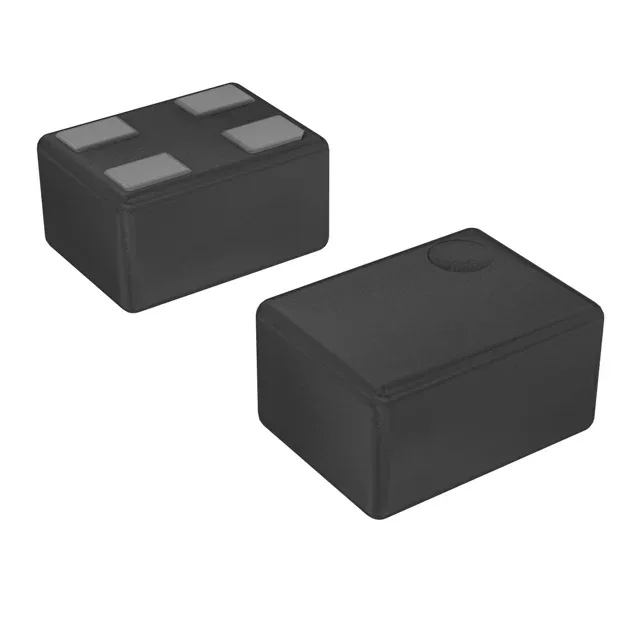
Microchip Technology DSC6001HE1A-020.9715T — Crystals & Oscillators

DSC6001HE1A-020.9715T Microchip MEMS Oscillator – Obsolete

MPNDSC6001HE1A-020.9715T
Obsolete

Microchip DSC6001HE1A-020.9715T, MEMS XO (Standard), 20.9715 MHz CMOS output, 1.71V–3.63V supply, ±50 ppm stability, AEC-Q100, 4-SMD no-lead package

$1.2000Ref. price · indicative, final on quote
Sourced new & surplus through independent channelsAuthenticity-screened · ESD-safe packingListing updated Jul 2026

Specifications

DSC6001HE1A-020.9715T specifications
ParameterValue
TypeXO (Standard)
SeriesDSC60XX
MountingSurface Mount
Voltage1.71V ~ 3.63V
Current - supply1.3mA (Typ)
Frequency20.9715 MHz
Frequency stability±50ppm
Operating temperature-20°C~70°C
Size (Dimension)0.063\" L x 0.047\" W (1.60mm x 1.20mm)
Height - seated0.035\" (0.89mm)
OutputCMOS
PackageTape & Reel (TR); Cut Tape (CT)
RatingsAEC-Q100
FunctionStandby (Power Down)
Base resonatorMEMS
Case4-SMD, No Lead
Absolute pull range±50ppm

Product details

Obsolete MEMS oscillator – sourcing path for existing BOM lines

Buyers supporting an existing BOM line should confirm availability per RFQ; quantities are sourced through independent surplus channels and confirmed at quote time.

20.9715 MHz CMOS clock with AEC-Q100 qualification

This MEMS-based XO delivers a 20.9715 MHz CMOS output with ±50 ppm frequency stability across the -20°C to +70°C commercial temperature range. The 1.71V to 3.63V supply rail makes it compatible with 1.8V, 2.5V, and 3.3V logic domains without an external level translator.

Package and footprint – 4-SMD no-lead, 1.6 x 1.2 mm

Housed in a 4-SMD, No Lead package measuring 1.60 mm x 1.20 mm with a seated height of 0.89 mm, this oscillator suits space-constrained PCB layouts. The surface-mount footprint is common across the DSC60XX series, simplifying layout reuse if a replacement is needed.

Frequently asked questions

Can the DSC6001HE1A-020.9715T be used in automotive applications?

Yes, it is AEC-Q100 qualified, but the -20°C to +70°C operating temperature restricts it to passenger-cabin or infotainment systems, not under-hood or engine-bay environments.