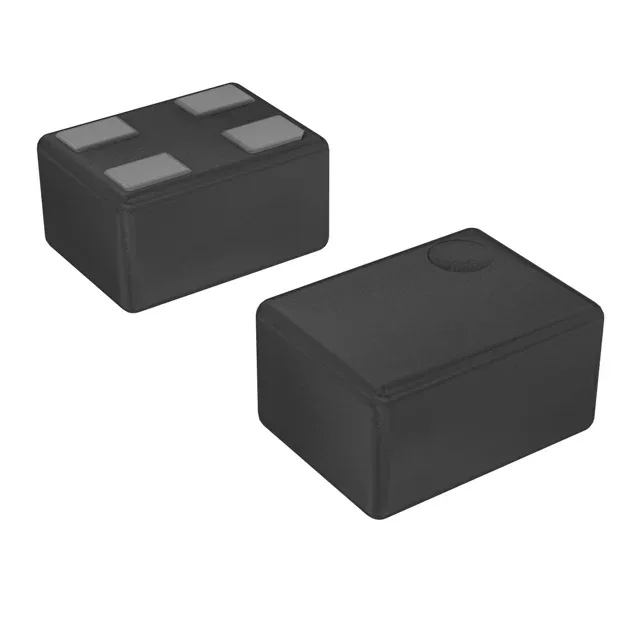
Microchip Technology DSC6001HA2B-029.4912T — Crystals & Oscillators

DSC6001HA2B-029.4912T MEMS XO 29.4912MHz AEC-Q100 -

MPNDSC6001HA2B-029.4912T
Active

Microchip DSC6001HA2B-029.4912T, MEMS-based XO (Standard), 29.4912 MHz CMOS output, ±25ppm stability, 1.71V~3.63V supply, -40°C~125°C, AEC-Q100, 4-VFLGA package.

Sourced new & surplus through independent channelsAuthenticity-screened · ESD-safe packingListing updated Aug 2026

Specifications

DSC6001HA2B-029.4912T specifications
ParameterValue
TypeXO (Standard)
SeriesDSC60XXB
MountingSurface Mount
Voltage1.71V ~ 3.63V
Current - supply1.3mA (Typ)
Frequency29.4912 MHz
Frequency stability±25ppm
Operating temperature-40°C~125°C
Size (Dimension)0.063\" L x 0.047\" W (1.60mm x 1.20mm)
Height - seated0.035\" (0.89mm)
OutputCMOS
PackageTape & Reel (TR)
RatingsAEC-Q100
FunctionEnable/Disable
Base resonatorMEMS
Case4-VFLGA

Product details

The DSC6001HA2B-029.4912T is a MEMS-based XO (Standard) from Microchip's DSC60XXB series, delivering a 29.4912 MHz CMOS output with ±25ppm frequency stability.

The 1.71V to 3.63V supply range lets this oscillator run from a 1.8V core rail or a 3.3V I/O rail without a separate LDO. Typical supply current is 1.3 mA max, which keeps the thermal contribution negligible in a sealed 4-VFLGA package (1.6mm x 1.2mm) — useful for space-constrained modules where every milliwatt counts.

Enable/Disable function and board-level control

Product status is Active.

Frequently asked questions

Is DSC6001HA2B-029.4912T AEC-Q100 qualified?

Yes. The DSC6001HA2B-029.4912T carries AEC-Q100 qualification, meaning it has passed automotive-grade reliability stress tests including temperature cycling, ESD, and latch-up. This qualifies it for under-hood and cabin applications where the ambient temperature reaches 125°C.

What is the frequency stability of DSC6001HA2B-029.4912T?

Frequency stability is ±25ppm over the full -40°C to 125°C range and supply voltage variation. This meets the jitter budget for 100BASE-T1 Ethernet and CAN-FD clocking in automotive designs without external trimming.

What is the difference between MEMS and quartz oscillators?

MEMS resonators (like the DSC6001HA2B-029.4912T) use a silicon micro-electromechanical structure instead of a quartz crystal. MEMS oscillators typically offer better shock and vibration tolerance (surviving 50,000 g shock vs ~1,000 g for quartz), faster startup time, and smaller package footprints. The trade-off is that MEMS oscillators have slightly higher phase noise than the best quartz oscillators, but for most digital clocking (MCU, Ethernet, CAN) the difference is negligible.