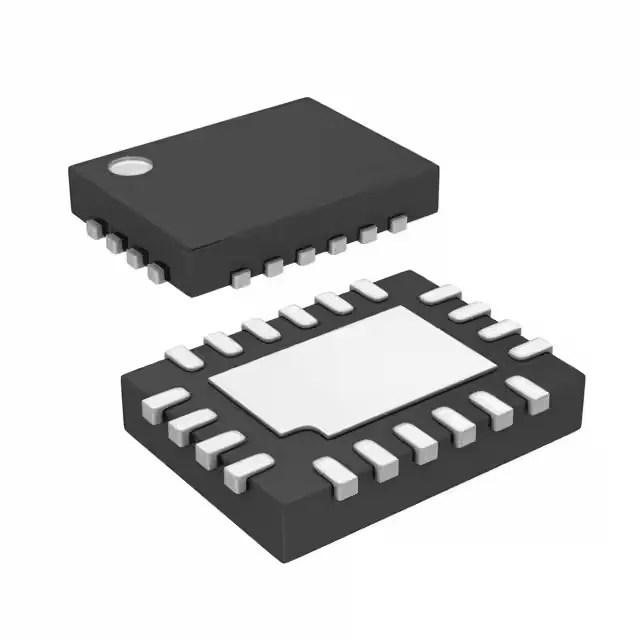
Microchip Technology DSC400-4334Q0022KE2T — Crystals & Oscillators

DSC400-4334Q0022KE2T MEMS XO 125/100 MHz HCSL LVDS

MPNDSC400-4334Q0022KE2T
Active

Microchip DSC400 series, XO (Standard) MEMS oscillator, four outputs: 125MHz, 100MHz, 100MHz, 125MHz, HCSL/LVDS, ±25ppm stability, 2.25V~3.6V supply, -20°C~70°C, 20-VFQFN exposed pad package.

Independent supplier — new & surplus stockAuthenticity-screened · ESD-safe packingListing updated Aug 2026

Specifications

DSC400-4334Q0022KE2T specifications
ParameterValue
TypeXO (Standard)
SeriesDSC400
Supply voltage2.25V ~ 3.6V
Frequency stability±25ppm
Frequency - output 1125MHz
Frequency - output 2100MHz
Frequency - output 3100MHz
Frequency - output 4125MHz
Operating temperature-20°C~70°C
Height0.035\" (0.90mm)
Size (Dimension)0.197\" L x 0.126\" W (5.00mm x 3.20mm)
OutputHCSL, LVDS
PackageTape & Reel (TR)
FunctionEnable/Disable
Base resonatorMEMS
Case20-VFQFN Exposed Pad

Product details

Four-output MEMS clock at 125 MHz / 100 MHz

The DSC400-4334Q0022KE2T delivers four clock outputs from a single MEMS resonator: two at 125 MHz and two at 100 MHz, with each output independently configurable as HCSL or LVDS. The 2.25 V to 3.6 V supply rail tolerance means the oscillator can share a 2.5 V or 3.3 V power plane without a dedicated LDO.

The MEMS resonator technology avoids the quartz supply constraints and aging drift that can affect traditional crystal oscillators, making it a stable sourcing choice over the product lifecycle.

Housed in a 20-VFQFN with exposed pad (5.00 mm x 3.20 mm, 0.90 mm height), the DSC400 requires a thermal pad on the PCB for both mechanical stability and heat sinking.

Frequently asked questions

What output types does the DSC400-4334Q0022KE2T support?

Each of the four outputs can be configured as HCSL or LVDS. This covers common high-speed clock interfaces: HCSL for PCIe reference clocks, LVDS for FPGA or SerDes clock inputs.

Can the DSC400-4334Q0022KE2T replace a standard quartz oscillator?

Functionally yes, but only if the board is designed for the 20-VFQFN package and the supply voltage range (2.25 V to 3.6 V). The MEMS resonator offers better shock and vibration tolerance than quartz, and the quad-output capability replaces multiple single-output oscillators plus a fan-out buffer.