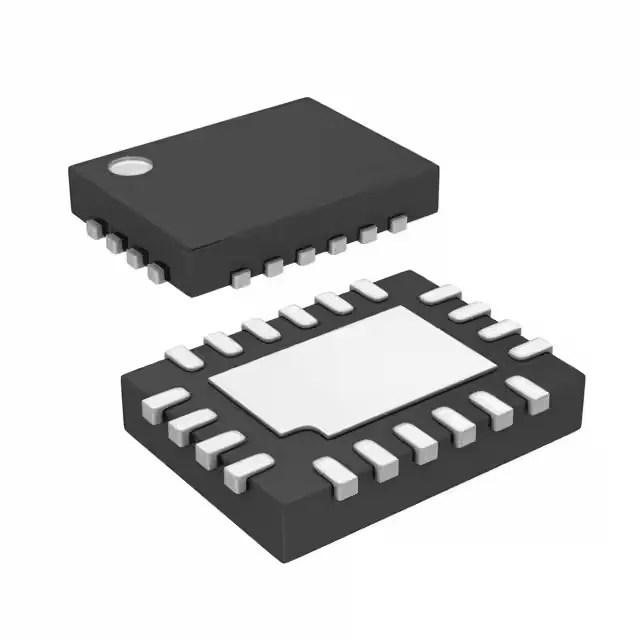
Microchip Technology DSC400-4111Q0112KE1T — Crystals & Oscillators

DSC400-4111Q0112KE1T 25 MHz & 100/156.25 MHz Quad Output

MPNDSC400-4111Q0112KE1T
Active

Microchip DSC400 series MEMS XO (Standard), quad-output: three 25 MHz lanes (HCSL/LVCMOS) plus one lane configurable to 100 MHz or 156.25 MHz, 2.25V–3.6V supply, enable/disable function, ±50 ppm stability, -20°C–70°C, 20-VFQFN exposed pad, Tape & Reel.

Independent supplier — new & surplus stockAuthenticity-screened · ESD-safe packingListing updated Aug 2026

Specifications

DSC400-4111Q0112KE1T specifications
ParameterValue
TypeXO (Standard)
SeriesDSC400
Supply voltage2.25V ~ 3.6V
Frequency stability±50ppm
Frequency - output 125MHz
Frequency - output 225MHz
Frequency - output 325MHz
Frequency - output 4100MHz, 156.25MHz
Operating temperature-20°C~70°C
Height0.035\" (0.90mm)
Size (Dimension)0.197\" L x 0.126\" W (5.00mm x 3.20mm)
OutputHCSL, LVCMOS
PackageTape & Reel (TR)
FunctionEnable/Disable
Base resonatorMEMS
Case20-VFQFN Exposed Pad

Product details

Quad-output MEMS XO with HCSL and LVCMOS lanes

Three lanes are fixed at 25 MHz each, supporting either HCSL or LVCMOS logic levels; the fourth lane is factory-programmed to 100 MHz or 156.25 MHz, making it a single-device clock source for a multi-rail FPGA or SoC clock tree. For a design that already uses the DSC400 family, this order code locks in a specific frequency plan — confirm the four output frequencies match your BOM before committing.

The 2.25V–3.6V supply range means this oscillator runs directly off a 2.5V or 3.3V rail without an intermediate LDO.

Active production, Tape & Reel packaging

The 0.90 mm height and 5.00 mm × 3.20 mm footprint fit within typical mezzanine card and module height budgets.

Frequently asked questions

Is DSC400-4111Q0112KE1T compatible with a 2.5V supply?

Yes. The supply range is 2.25V–3.6V, so a 2.5V rail is well within the operating window. No external regulator is needed between the rail and the VDD pin.

Does DSC400-4111Q0112KE1T support an enable/disable function?

Yes, the function is listed as Enable/Disable. A logic-level on the enable pin gates all four outputs, which allows the system to shut down the clock tree during low-power modes without a separate clock buffer.