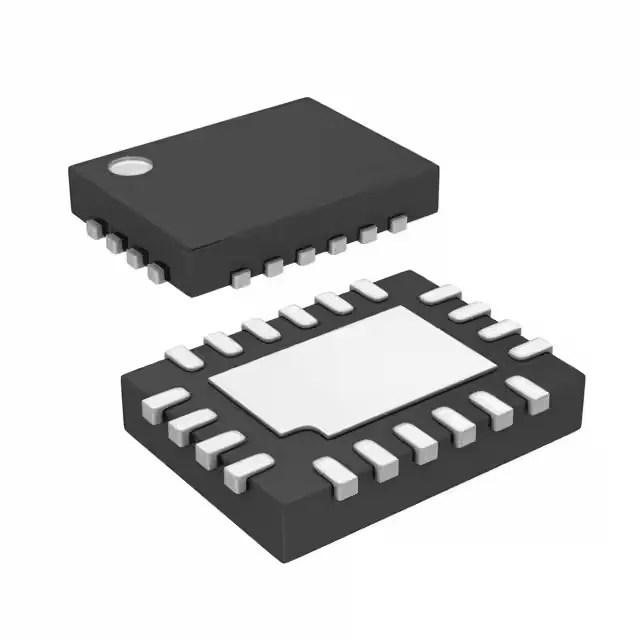
Microchip Technology DSC400-3333Q0104KI2T — Crystals & Oscillators

DSC400-3333Q0104KI2T MEMS XO – 4 LVDS Outputs

MPNDSC400-3333Q0104KI2T
Active

Microchip DSC400-3333Q0104KI2T, MEMS-based XO (Standard), LVDS output, 4 independent frequencies: 125 MHz, 100 MHz, 200 MHz, 156.25 MHz, ±25 ppm stability, -40°C to 85°C, 20-VFQFN exposed pad, tape & reel.

Independent supplier — new & surplus stockAuthenticity-screened · ESD-safe packingListing updated Aug 2026

Specifications

DSC400-3333Q0104KI2T specifications
ParameterValue
TypeXO (Standard)
SeriesDSC400
Supply voltage2.25V ~ 3.6V
Frequency stability±25ppm
Frequency - output 1125MHz
Frequency - output 2100MHz
Frequency - output 3200MHz
Frequency - output 4156.25MHz
Operating temperature-40°C~85°C
Height0.035\" (0.90mm)
Size (Dimension)0.197\" L x 0.126\" W (5.00mm x 3.20mm)
OutputLVDS
PackageTape & Reel (TR)
FunctionEnable/Disable
Base resonatorMEMS
Case20-VFQFN Exposed Pad

Product details

Four-clock MEMS oscillator in a single 5×3.2 mm package

The DSC400-3333Q0104KI2T is a MEMS-based XO (Standard) from Microchip that delivers four independent LVDS clock outputs — 125 MHz, 100 MHz, 200 MHz, and 156.25 MHz — from a single 20-VFQFN package measuring 5.00 mm × 3.20 mm.

Supply flexibility and output control

A wide supply range of 2.25 V to 3.6 V lets this oscillator operate from either a 2.5 V or 3.3 V rail without an intermediate regulator — useful when the same BOM must span multiple logic families.

Active lifecycle – no end-of-life concern

No last-time-buy or successor planning is required.

Frequently asked questions

What is the output type of the DSC400-3333Q0104KI2T?

All four outputs are LVDS — a differential standard that provides low noise and high common-mode rejection, suitable for driving clock lines over longer PCB traces or to multiple loads.

Can the DSC400-3333Q0104KI2T replace a standard 125 MHz crystal oscillator?

Yes, if the application requires a single 125 MHz LVDS clock, this part provides that output plus three additional frequencies — but the 20-VFQFN package and MEMS-based architecture differ from a standard quartz oscillator. Verify the footprint and supply voltage compatibility before substitution.