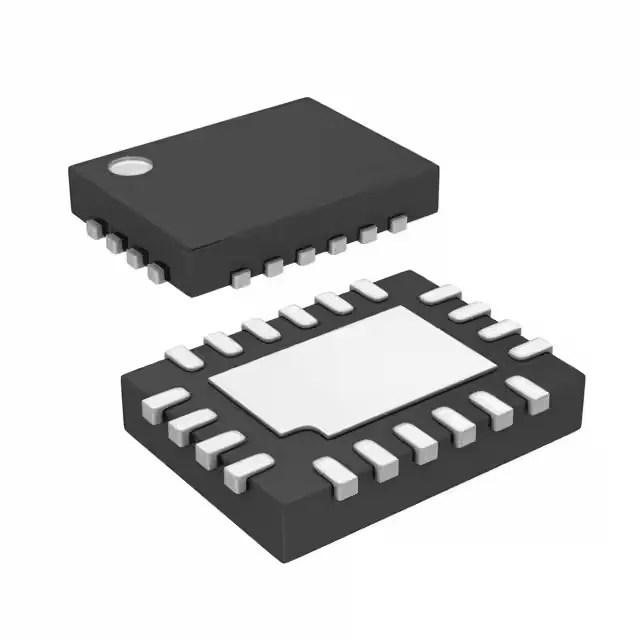
Microchip Technology DSC400-3333Q0104KE2T — Crystals & Oscillators

DSC400-3333Q0104KE2T MEMS XO, LVDS

MPNDSC400-3333Q0104KE2T
Active

Microchip DSC400 series, XO (Standard) MEMS oscillator, LVDS output, quad frequency: 125 MHz, 100 MHz, 200 MHz, 156.25 MHz, ±25 ppm stability, -20°C to +70°C, 20-VFQFN exposed pad, tape and reel.

Sourced new & surplus through independent channelsAuthenticity-screened · ESD-safe packingListing updated Aug 2026

Specifications

DSC400-3333Q0104KE2T specifications
ParameterValue
TypeXO (Standard)
SeriesDSC400
Voltage2.25V ~ 3.6V
Frequency stability±25ppm
Frequency - output 1125MHz
Frequency - output 2100MHz
Frequency - output 3200MHz
Frequency - output 4156.25MHz
Operating temperature-20°C~70°C
Height0.035\" (0.90mm)
Size (Dimension)0.197\" L x 0.126\" W (5.00mm x 3.20mm)
OutputLVDS
PackageTape & Reel (TR)
FunctionEnable/Disable
Base resonatorMEMS
Case20-VFQFN Exposed Pad

Product details

Four clocks from one package

The DSC400-3333Q0104KE2T is a MEMS-based XO that delivers four independent LVDS clock outputs from a single 20-VFQFN package measuring 5.00 mm x 3.20 mm. Output frequencies are 125 MHz, 100 MHz, 200 MHz, and 156.25 MHz — a set that directly serves common Ethernet, PCIe, and SerDes reference clock requirements without extra PLLs or fanout buffers. The MEMS resonator replaces a quartz crystal, giving better resistance to shock and vibration and a faster startup time — useful in networking switches, industrial controllers, and test equipment where a single board may need multiple clock domains.

Supply voltage and temperature range

Supply voltage spans 2.25 V to 3.6 V, covering both 2.5 V and 3.3 V rails without an intermediate regulator. The operating temperature range is -20°C to +70°C, which suits commercial and most indoor industrial environments — not rated for extended automotive or outdoor telecom enclosures. Frequency stability is ±25 ppm across the full temperature and supply range, tight enough for most 1 GbE and SATA reference clock jitter budgets.

Active lifecycle, no obsolescence pressure

Product status is Active per the manufacturer — no last-time-buy window, no NRND flag. The Enable/Disable function on the pinout lets the system shut down unused outputs for power savings.

Frequently asked questions

What is the difference between DSC400-3333Q0104KE2T and DSC400-3333Q0104KE1T?

The order code suffix differentiates output format and frequency plan. The 'E2T' suffix on this variant specifies LVDS outputs; the 'E1T' variant uses a different output type. Confirm the output logic family and frequency set against your receiver input requirements before substituting.