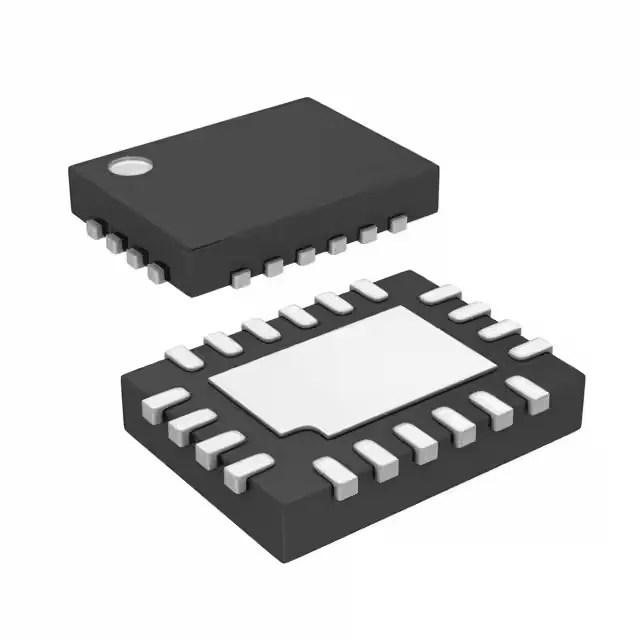
Microchip Technology DSC400-3333Q0089KE2T — Crystals & Oscillators

DSC400-3333Q0089KE2T MEMS XO LVDS 148.35/148.5 MHz –

MPNDSC400-3333Q0089KE2T
Active

Microchip DSC400 series MEMS XO (Standard), LVDS output, dual frequencies 148.35 MHz and 148.5 MHz, ±25 ppm stability, 2.25-3.6 V supply, 20-VFQFN exposed pad package, Enable/Disable function, Tape & Reel.

Sourced new & surplus through independent channelsAuthenticity-screened · ESD-safe packingListing updated Aug 2026

Specifications

DSC400-3333Q0089KE2T specifications
ParameterValue
TypeXO (Standard)
SeriesDSC400
Voltage2.25V ~ 3.6V
Frequency stability±25ppm
Frequency - output 1148.35MHz
Frequency - output 2148.5MHz
Operating temperature-20°C~70°C
Height0.035\" (0.90mm)
Size (Dimension)0.197\" L x 0.126\" W (5.00mm x 3.20mm)
OutputLVDS
PackageTape & Reel (TR)
FunctionEnable/Disable
Base resonatorMEMS
Case20-VFQFN Exposed Pad

Product details

Active MEMS XO for broadcast video clocking

The DSC400-3333Q0089KE2T is an active-production Microchip MEMS XO delivering two LVDS clock outputs at 148.35 MHz and 148.5 MHz — the exact pixel rates for 1080p59.94 and 1080p60 video standards. It is a drop-in timing source for professional broadcast cameras, video switchers, and SDI transmission gear that needs both frame rates on the same board.

Runs from 2.25 V to 3.6 V, covering 2.5 V and 3.3 V logic rails without an extra regulator. For a 148.5 MHz clock, that is a maximum drift of ±3.7 kHz — well within the capture range of a downstream PLL in a video decoder or FPGA transceiver.

Package and board layout notes

20-VFQFN with exposed pad, 5.00 mm × 3.20 mm body, 0.90 mm height. The 0.50 mm pitch QFN demands a solder-paste stencil aperture that matches the land pattern; a 4-mil stencil is typical.

Frequently asked questions

Is the DSC400-3333Q0089KE2T LVDS or CMOS output?

It is LVDS output. The differential pair delivers low-jitter clocking over longer PCB traces than single-ended CMOS, which is why it is specified for the 148.35/148.5 MHz dual frequencies.