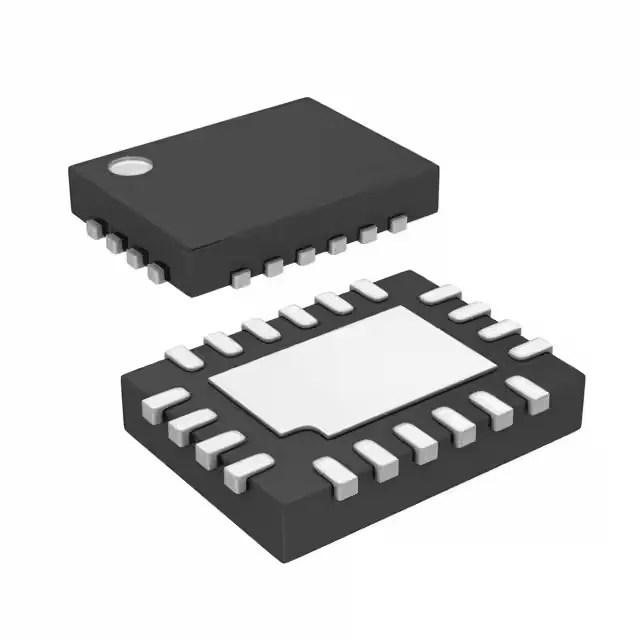
Microchip Technology DSC400-3331Q0097KI1T — Crystals & Oscillators

DSC400-3331Q0097KI1T MEMS XO – Quad Output 16 MHz / 50 MHz

MPNDSC400-3331Q0097KI1T
Active

Microchip Technology DSC400 series, XO (Standard) MEMS oscillator, 16 MHz + 50 MHz + 50 MHz + 50 MHz outputs, LVCMOS / LVDS, ±50 ppm stability, -40 to 85 °C, 20-VFQFN exposed pad, Tape & Reel

Sourced new & surplus through independent channelsAuthenticity-screened · ESD-safe packingListing updated Aug 2026

Specifications

DSC400-3331Q0097KI1T specifications
ParameterValue
TypeXO (Standard)
SeriesDSC400
Voltage2.25V ~ 3.6V
Frequency stability±50ppm
Frequency - output 116MHz
Frequency - output 250MHz
Frequency - output 350MHz
Frequency - output 450MHz
Operating temperature-40°C~85°C
Height0.035\" (0.90mm)
Size (Dimension)0.197\" L x 0.126\" W (5.00mm x 3.20mm)
OutputLVCMOS, LVDS
PackageTape & Reel (TR)
FunctionEnable/Disable
Base resonatorMEMS
Case20-VFQFN Exposed Pad

Product details

Four clocks from one MEMS resonator

The DSC400-3331Q0097KI1T packs four independent output clocks into a single 5.00 mm x 3.20 mm VFQFN package: one 16 MHz and three 50 MHz channels, all derived from a MEMS base resonator. Each output can be configured as LVCMOS or LVDS, letting the same oscillator feed both a logic-level system clock (16 MHz) and three differential high-speed links (50 MHz) without extra fanout buffers.

Stability and temperature range for industrial use

Supply voltage spans 2.25 V to 3.6 V, so the oscillator works directly from a 2.5 V or 3.3 V rail without an external LDO — one less component on the BOM.

Package and layout notes for the 20-VFQFN

No pin-compatible second source or direct replacement is listed — the DSC400 series is the only family carrying this exact output configuration.

Frequently asked questions

What output types does the DSC400-3331Q0097KI1T support?

Each of the four outputs can be independently configured as LVCMOS or LVDS. This means the 16 MHz output can drive a logic-level clock input while the three 50 MHz outputs drive differential receivers — all from one oscillator.