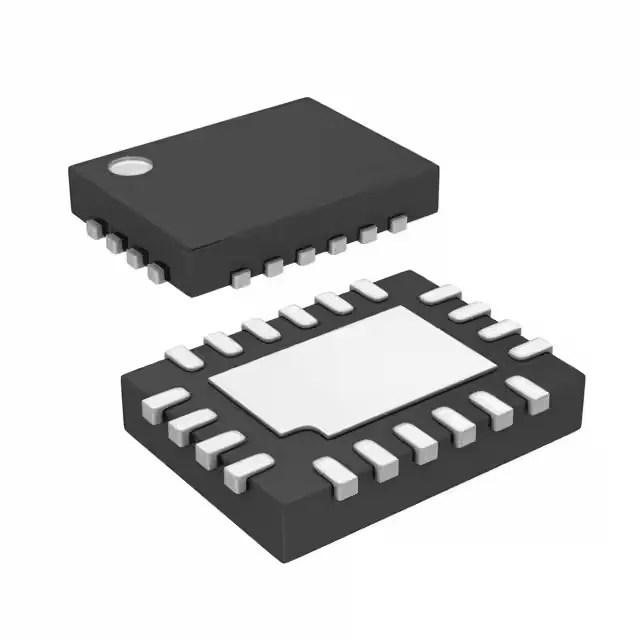
Microchip Technology DSC400-3133Q0080KE1 — Crystals & Oscillators

DSC400-3133Q0080KE1 MEMS XO – Quad Output, Active Production

MPNDSC400-3133Q0080KE1
Active

Microchip DSC400 series, XO (Standard), quad-output MEMS oscillator, outputs 148.35 MHz, 27 MHz, 25 MHz, 148.35 MHz, LVCMOS/LVDS, ±50 ppm stability, 2.25-3.6V supply, -20°C to 70°C.

Sourced new & surplus through independent channelsAuthenticity-screened · ESD-safe packingListing updated Aug 2026

Specifications

DSC400-3133Q0080KE1 specifications
ParameterValue
TypeXO (Standard)
SeriesDSC400
Voltage2.25V ~ 3.6V
Frequency stability±50ppm
Frequency - output 1148.35MHz
Frequency - output 227MHz
Frequency - output 325MHz
Frequency - output 4148.35MHz
Operating temperature-20°C~70°C
Height0.035\" (0.90mm)
Size (Dimension)0.197\" L x 0.126\" W (5.00mm x 3.20mm)
OutputLVCMOS, LVDS
PackageTube
FunctionEnable/Disable
Base resonatorMEMS
Case20-VFQFN Exposed Pad

Product details

Quad-output MEMS clock in a 5×3.2 mm QFN

The DSC400-3133Q0080KE1 is a MEMS-based XO (Standard) that delivers four independent frequencies from a single 20-VFQFN package: 148.35 MHz, 27 MHz, 25 MHz, and 148.35 MHz. Outputs are configurable as LVCMOS or LVDS, giving the board designer flexibility to drive single-ended or differential clock lines without a separate translator. Supply voltage spans 2.25 V to 3.6 V, so the same part can run from a 2.5 V or 3.3 V rail — no need to stock multiple voltage variants.

Active production with ±50 ppm stability

Housed in a 20-VFQFN Exposed Pad measuring 5.00 mm × 3.20 mm with a 0.90 mm height — the exposed pad requires a thermal via pattern under the package for proper heatsinking and ground return. Supplied in tube; the MEMS resonator provides faster startup and better shock tolerance than quartz, relevant for portable or vibration-prone installations.

Frequently asked questions

What output types does the DSC400-3133Q0080KE1 support?

It supports both LVCMOS and LVDS outputs, selectable per output. LVDS is preferred for differential clock distribution over long traces or to high-speed converters; LVCMOS is simpler for single-ended fan-out.