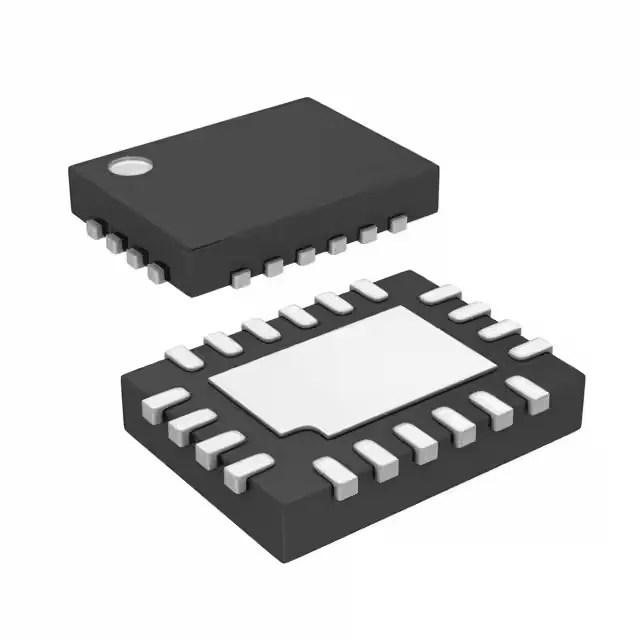
Microchip Technology DSC400-3111Q0088KI1 — Crystals & Oscillators

DSC400-3111Q0088KI1 MEMS XO – Quad Output, Active

MPNDSC400-3111Q0088KI1
Active

Microchip Technology DSC400 series, XO (Standard), MEMS-based quad-output oscillator: 148.25 MHz, 12/24 MHz, 25/100 MHz, 148.25 MHz, LVCMOS/LVDS, ±50 ppm, -40°C to 85°C, 2.25V-3.6V supply, 20-VFQFN exposed pad.

Sourced new & surplus through independent channelsAuthenticity-screened · ESD-safe packingListing updated Aug 2026

Specifications

DSC400-3111Q0088KI1 specifications
ParameterValue
TypeXO (Standard)
SeriesDSC400
Voltage2.25V ~ 3.6V
Frequency stability±50ppm
Frequency - output 1148.25MHz
Frequency - output 212MHz, 24MHz
Frequency - output 325MHz, 100MHZ
Frequency - output 4148.25MHz
Operating temperature-40°C~85°C
Height0.035\" (0.90mm)
Size (Dimension)0.197\" L x 0.126\" W (5.00mm x 3.20mm)
OutputLVCMOS, LVDS
PackageTube
FunctionEnable/Disable
Base resonatorMEMS
Case20-VFQFN Exposed Pad

Product details

MEMS oscillator with four independent clock outputs

Output 1 and Output 4 each provide 148.25 MHz; Output 2 supplies 12 MHz and 24 MHz; Output 3 supplies 25 MHz and 100 MHz — all in LVCMOS or LVDS format. This replaces multiple discrete oscillators on the BOM, saving board space and reducing procurement line items.

The supply voltage spans 2.25V to 3.6V, covering 2.5V and 3.3V rails common in FPGA and SoC designs — no extra LDO needed for the oscillator alone. Frequency stability is ±50 ppm, adequate for 1000BASE-T Ethernet, USB 2.0, and general-purpose clock trees. For precision RF or 10G+ SerDes, a tighter ±25 ppm or TCXO would be the better call.

The 20-VFQFN exposed-pad package (5.00mm x 3.20mm, 0.90mm height) requires a thermal via pattern under the pad for proper solder-joint reliability — standard for this class.

Frequently asked questions

What is the closest alternative if the DSC400-3111Q0088KI1 is unavailable?

Within the DSC400 family, any factory-programmed variant with the same 20-VFQFN package and supply voltage range is footprint-compatible — the frequency plan is the only difference. No exact pin-compatible second source from another manufacturer is documented. For a drop-in replacement, confirm the output frequencies match your clock tree.