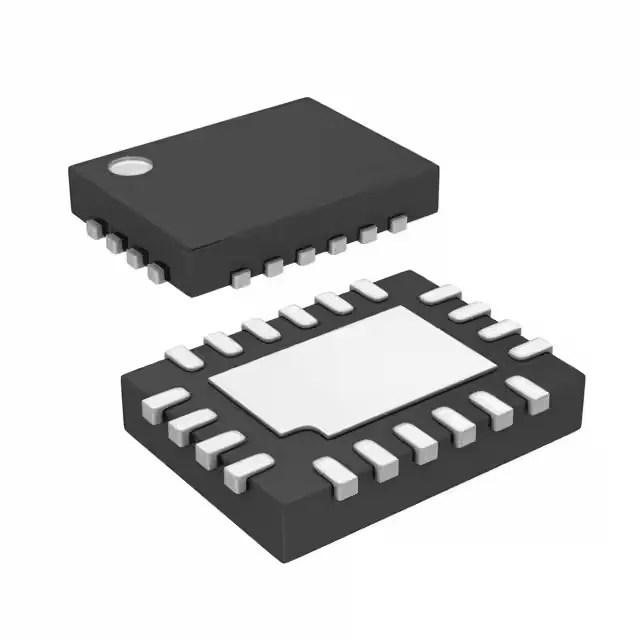
Microchip Technology DSC400-2222Q0104KE1 — Crystals & Oscillators

DSC400-2222Q0104KE1 MEMS XO – 4 LVPECL Outputs, Active

MPNDSC400-2222Q0104KE1
Active

Microchip DSC400 series, XO (Standard), MEMS resonator, 4-output LVPECL clock generator: 125 MHz, 100 MHz, 200 MHz, 156.25 MHz, ±50 ppm stability, 2.25-3.6 V supply, -20 to 70°C, 20-VFQFN exposed pad.

Sourced new & surplus through independent channelsAuthenticity-screened · ESD-safe packingListing updated Aug 2026

Specifications

DSC400-2222Q0104KE1 specifications
ParameterValue
TypeXO (Standard)
SeriesDSC400
Voltage2.25V ~ 3.6V
Frequency stability±50ppm
Frequency - output 1125MHz
Frequency - output 2100MHz
Frequency - output 3200MHz
Frequency - output 4156.25MHz
Operating temperature-20°C~70°C
Height0.035\" (0.90mm)
Size (Dimension)0.197\" L x 0.126\" W (5.00mm x 3.20mm)
OutputLVPECL
PackageTube
FunctionEnable/Disable
Base resonatorMEMS
Case20-VFQFN Exposed Pad

Product details

Four clocks, one MEMS die – what it replaces on your BOM

The DSC400-2222Q0104KE1 is a MEMS-based XO that generates four independent LVPECL output frequencies from a single silicon resonator — 125 MHz, 100 MHz, 200 MHz, and 156.25 MHz. That replaces four separate quartz oscillators on the board, saving both layout area and four BOM line items.

Supply rail flexibility and the enable/disable pin

The supply voltage range is 2.25 V to 3.6 V, so a single 2.5 V or 3.3 V rail powers all four outputs. No second regulator needed for mixed-voltage logic families.

Package footprint and the exposed-pad reality

The 20-VFQFN with exposed pad measures 5.00 mm x 3.20 mm and stands 0.90 mm tall. The board layout engineer should plan for that thermal via pattern before the first spin; the footprint alone is not enough.

Frequently asked questions

How does this MEMS oscillator compare to a standard quartz XO?

The MEMS resonator eliminates quartz aging drift and is more resistant to shock and vibration — a quartz XO can shift frequency after a mechanical shock that a MEMS part shrugs off. The trade-off is that the MEMS part has a slightly higher phase-noise floor than a high-end quartz OCXO, but for most digital clocking (FPGA reference, Ethernet PHY, switch fabric) the difference is negligible. The ±50 ppm stability is comparable to a standard quartz XO.