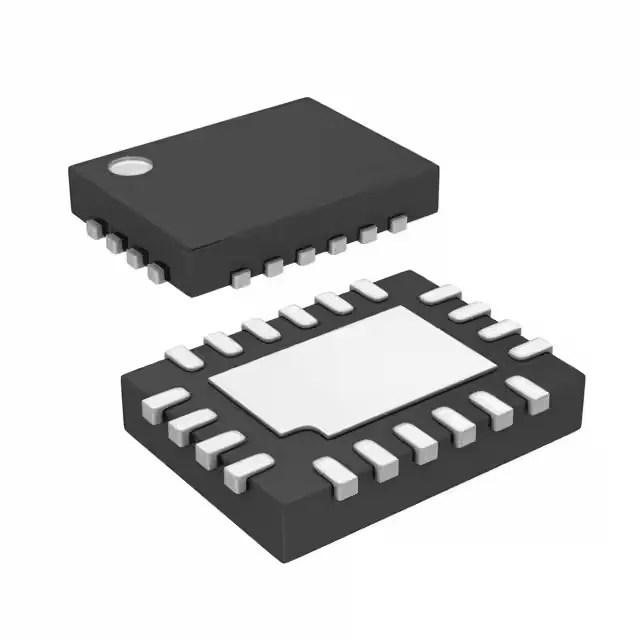
Microchip Technology DSC400-1111Q0084KE2T — Crystals & Oscillators

DSC400-1111Q0084KE2T MEMS XO – 4-Channel LVCMOS Clock

MPNDSC400-1111Q0084KE2T
Active

Microchip DSC400 series, XO (Standard), MEMS-based quad-output clock oscillator, LVCMOS, 33.33333 MHz / 50 MHz / 125 MHz / 100 MHz, ±25ppm stability, 2.25-3.6 V supply, 20-VFQFN exposed pad package, tape & reel.

Independent supplier — new & surplus stockAuthenticity-screened · ESD-safe packingListing updated Aug 2026

Specifications

DSC400-1111Q0084KE2T specifications
ParameterValue
TypeXO (Standard)
SeriesDSC400
Supply voltage2.25V ~ 3.6V
Frequency stability±25ppm
Frequency - output 133.33333MHz
Frequency - output 250MHz
Frequency - output 3125MHz
Frequency - output 4100MHz
Operating temperature-20°C~70°C
Height0.035\" (0.90mm)
Size (Dimension)0.197\" L x 0.126\" W (5.00mm x 3.20mm)
OutputLVCMOS
PackageTape & Reel (TR)
FunctionEnable/Disable
Base resonatorMEMS
Case20-VFQFN Exposed Pad

Product details

Four independent clocks from one MEMS die

The DSC400-1111Q0084KE2T packs four separate LVCMOS clock outputs — 33.33333 MHz, 50 MHz, 125 MHz, and 100 MHz — into a single 5.0x3.2 mm QFN package, replacing four discrete crystal oscillators and cutting BOM count and board area.

Wide supply tolerance and enable/disable control

Supply voltage spans 2.25 V to 3.6 V, so the same oscillator works on a 2.5 V or 3.3 V rail without a separate regulator — handy when the board has mixed logic domains. An Enable/Disable pin lets firmware gate the outputs for power-sensitive sleep modes; the MEMS resonator keeps running, so restart latency is short.

Frequently asked questions

How can I order the DSC400-1111Q0084KE2T and check availability?

The DSC400-1111Q0084KE2T is an active Microchip product, quoted to order against your BOM quantity. Submit an RFQ for current pricing and lead time — no stock-holding claim is made here.

What are the exact output frequencies and stability of the DSC400-1111Q0084KE2T?

Four LVCMOS outputs: 33.33333 MHz, 50 MHz, 125 MHz, and 100 MHz, with ±25 ppm frequency stability over -20 to +70 °C.