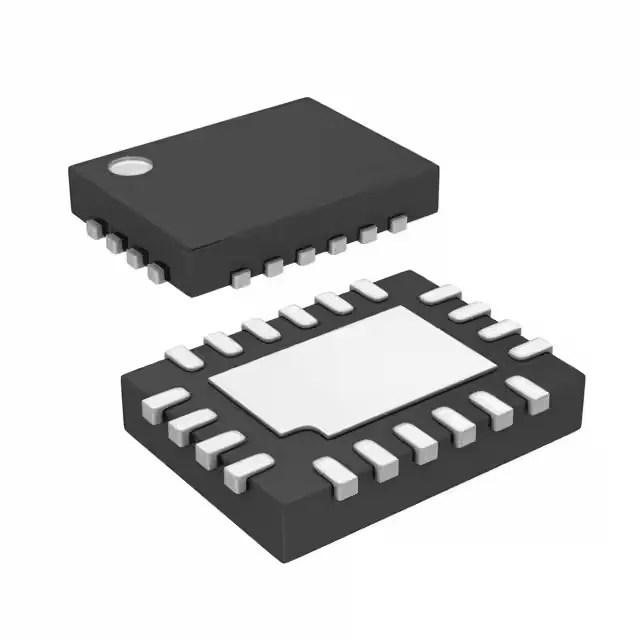
Microchip Technology DSC400-1111Q0025KE1 — Crystals & Oscillators

DSC400-1111Q0025KE1 MEMS Oscillator – Quad LVCMOS

MPNDSC400-1111Q0025KE1
Active

Microchip DSC400 series MEMS XO (Standard), quad-output oscillator delivering 125 MHz, 25 MHz, 24 MHz, and 25 MHz LVCMOS clocks from a single 5.00 mm x 3.20 mm VFQFN package.

Independent supplier — new & surplus stockAuthenticity-screened · ESD-safe packingListing updated Aug 2026

Specifications

DSC400-1111Q0025KE1 specifications
ParameterValue
TypeXO (Standard)
SeriesDSC400
Supply voltage2.25V ~ 3.6V
Frequency stability±50ppm
Frequency - output 1125MHz
Frequency - output 225MHz
Frequency - output 324MHz
Frequency - output 425MHz
Operating temperature-20°C~70°C
Height0.035\" (0.90mm)
Size (Dimension)0.197\" L x 0.126\" W (5.00mm x 3.20mm)
OutputLVCMOS
PackageTube
FunctionEnable/Disable
Base resonatorMEMS
Case20-VFQFN Exposed Pad

Product details

Four clocks, one package, one BOM line

The DSC400-1111Q0025KE1 integrates four independent LVCMOS oscillators — 125 MHz, 25 MHz, 24 MHz, and a second 25 MHz — into a single 20-VFQFN package measuring 5.00 mm x 3.20 mm. This replaces four discrete crystal oscillators, saving board area and reducing procurement line items.

The 2.25 V to 3.6 V supply range covers both 2.5 V and 3.3 V logic rails without an external regulator. A single DSC400-1111Q0025KE1 can be powered from either rail, simplifying power distribution on mixed-voltage boards.

No pin-compatible second source or successor is recorded; the DSC400 series is the sole family.

Frequently asked questions

What supply voltages does the DSC400-1111Q0025KE1 support?

The supply range is 2.25 V to 3.6 V, covering both 2.5 V and 3.3 V rails. The part can be powered from either rail without an external regulator.

Does the DSC400-1111Q0025KE1 have an enable/disable pin?

Yes, the function is listed as Enable/Disable. The outputs can be tri-stated for power sequencing or test modes.

What is the frequency stability of the DSC400-1111Q0025KE1?

The frequency stability is ±50 ppm over the -20 °C to +70 °C operating temperature range.