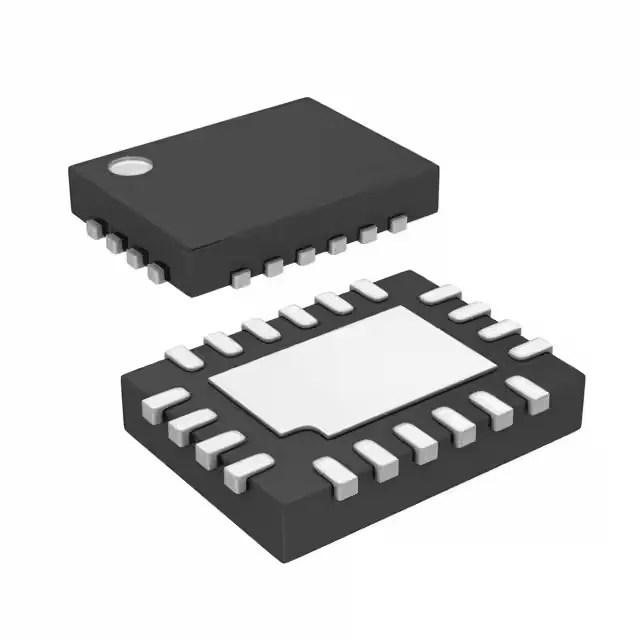
Microchip Technology DSC400-1111Q0001KI2 — Crystals & Oscillators

DSC400-1111Q0001KI2 MEMS XO – Quad 100 MHz LVCMOS, Active

MPNDSC400-1111Q0001KI2
Active

Microchip DSC400 series MEMS XO (Standard), four 100 MHz LVCMOS outputs, ±25 ppm stability, 2.25V–3.6V supply, -40°C to +85°C, 20-VFQFN exposed-pad package, enable/disable function.

Independent supplier — new & surplus stockAuthenticity-screened · ESD-safe packingListing updated Aug 2026

Specifications

DSC400-1111Q0001KI2 specifications
ParameterValue
TypeXO (Standard)
SeriesDSC400
Supply voltage2.25V ~ 3.6V
Frequency stability±25ppm
Frequency - output 1100MHz
Frequency - output 2100MHz
Frequency - output 3100MHz
Frequency - output 4100MHz
Operating temperature-40°C~85°C
Height0.035\" (0.90mm)
Size (Dimension)0.197\" L x 0.126\" W (5.00mm x 3.20mm)
OutputLVCMOS
PackageTube
FunctionEnable/Disable
Base resonatorMEMS
Case20-VFQFN Exposed Pad

Product details

Four 100 MHz outputs in one 5×3.2 mm package

The DSC400-1111Q0001KI2 delivers four independent 100 MHz LVCMOS clock outputs from a single MEMS resonator, replacing four separate XO cans on the board. That saves three oscillator positions and the associated routing — a real layout win when you are feeding a multi-core processor or a bank of FPGAs that all need the same reference.

Supply flexibility and output control

The wide 2.25 V to 3.6 V supply rail means the same part works on a 2.5 V or 3.3 V plane without a separate regulator. At ±25 ppm frequency stability, the jitter budget stays tight enough for 100 MHz LVCMOS clock trees driving DDR memory interfaces or high-speed serial links.

Microchip lists the DSC400-1111Q0001KI2 as Active.

Frequently asked questions

Can DSC400-1111Q0001KI2 replace a standard crystal oscillator?

It replaces a quartz-based XO, not a bare crystal — the MEMS resonator and oscillator circuit are integrated. If your board currently uses four separate 100 MHz XO cans, this single 20-VFQFN part can replace all four, saving board space and reducing BOM line count. Verify the output format (LVCMOS) and supply voltage (2.25 V–3.6 V) match your clock inputs.