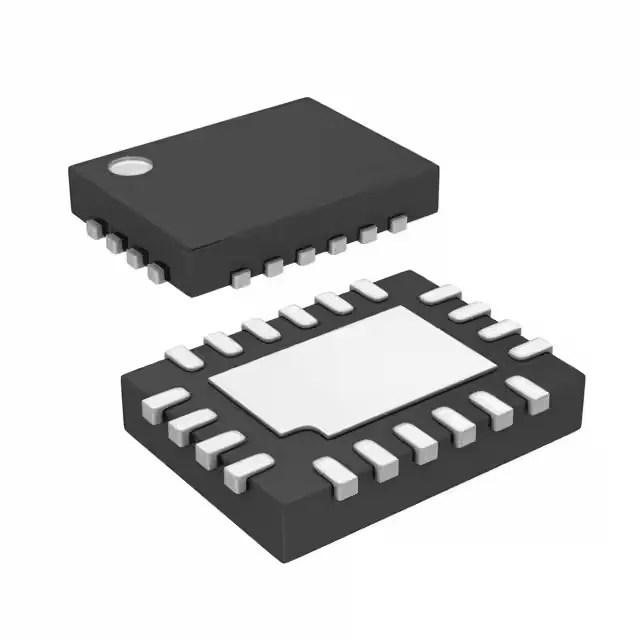
Microchip Technology DSC400-0401Q0103KI1T — Crystals & Oscillators

DSC400-0401Q0103KI1T MEMS Oscillator

MPNDSC400-0401Q0103KI1T
Active

Microchip Technology DSC400-0401Q0103KI1T, XO (Standard) MEMS oscillator, dual outputs 12.288MHz and 100MHz, HCSL/LVCMOS, ±50ppm stability, -40°C~85°C, 20-VFQFN exposed pad

Independent supplier — new & surplus stockAuthenticity-screened · ESD-safe packingListing updated Aug 2026

Specifications

DSC400-0401Q0103KI1T specifications
ParameterValue
TypeXO (Standard)
SeriesDSC400
Supply voltage2.25V ~ 3.6V
Frequency stability±50ppm
Frequency - output 112.288MHz
Frequency - output 2100MHz
Operating temperature-40°C~85°C
Height0.035\" (0.90mm)
Size (Dimension)0.197\" L x 0.126\" W (5.00mm x 3.20mm)
OutputHCSL, LVCMOS
PackageTape & Reel (TR)
FunctionEnable/Disable
Base resonatorMEMS
Case20-VFQFN Exposed Pad

Product details

Dual-output MEMS oscillator for clock-tree consolidation

The DSC400-0401Q0103KI1T is a MEMS-based XO (Standard) from Microchip's DSC400 series, delivering two independent clock outputs from a single 20-VFQFN package: 12.288 MHz and 100 MHz. This replaces two discrete oscillators on the board, saving footprint and reducing BOM line count. Outputs are configurable as HCSL or LVCMOS, covering common logic families for Ethernet PHYs, FPGAs, and SoC reference clocks without a level translator.

Supply voltage spans 2.25 V to 3.6 V, so the same part works in 2.5 V and 3.3 V rails without a separate regulator — common in mixed-voltage designs.

MEMS reliability and frequency stability

Frequently asked questions

What signals does the DSC400-0401Q0103KI1T output?

It outputs two fixed frequencies: 12.288 MHz and 100 MHz. Each output can be configured as HCSL or LVCMOS logic levels, covering common reference clock needs for Ethernet, PCIe, and FPGA applications.

Is the DSC400-0401Q0103KI1T a suitable replacement for a crystal oscillator?

Yes, it directly replaces a standard crystal oscillator (XO) in the same footprint and supply voltage range. The MEMS resonator offers faster startup and better shock resistance than a quartz crystal, though the frequency stability (±50 ppm) is comparable to a good quartz XO.