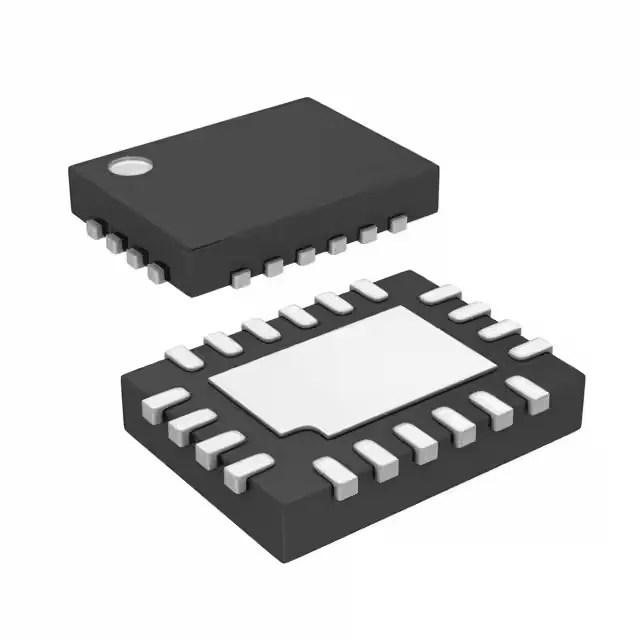
Microchip Technology DSC400-0333Q0032KE1T — Crystals & Oscillators

DSC400-0333Q0032KE1T MEMS Oscillator – Microchip – LVDS

MPNDSC400-0333Q0032KE1T
Active

Microchip DSC400 series, XO (Standard) MEMS oscillator, LVDS output, 24.576 MHz / 24 MHz / 25 MHz, ±50 ppm stability, 20-VFQFN exposed pad, -20°C~70°C

Independent supplier — new & surplus stockAuthenticity-screened · ESD-safe packingListing updated Aug 2026

Specifications

DSC400-0333Q0032KE1T specifications
ParameterValue
TypeXO (Standard)
SeriesDSC400
Supply voltage2.25V ~ 3.6V
Frequency stability±50ppm
Frequency - output 124.576MHz
Frequency - output 224MHz
Frequency - output 325MHz
Operating temperature-20°C~70°C
Height0.035\" (0.90mm)
Size (Dimension)0.197\" L x 0.126\" W (5.00mm x 3.20mm)
OutputLVDS
PackageTape & Reel (TR)
FunctionEnable/Disable
Base resonatorMEMS
Case20-VFQFN Exposed Pad

Product details

Three-output MEMS clock in a 5×3.2 mm QFN

The DSC400-0333Q0032KE1T is a MEMS-based XO (Standard) oscillator from Microchip's DSC400 series, delivering three independent LVDS clock outputs at 24.576 MHz, 24 MHz, and 25 MHz from a single 20-VFQFN package measuring 5.00 mm × 3.20 mm.

Runs on a 2.25 V to 3.6 V supply, so it sits comfortably on a 2.5 V or 3.3 V rail without an extra LDO.

The ±50 ppm frequency stability across temperature and supply sets the reference accuracy for downstream PLLs and data converters — a 24.576 MHz clock with ±50 ppm drifts no more than about 1.2 kHz worst-case, which is tight enough for a 1000BASE-T Ethernet PHY or an audio codec with a 12.288 MHz MCLK.

Frequently asked questions

Where can I buy DSC400-0333Q0032KE1T?

We source the DSC400-0333Q0032KE1T through independent distribution channels. Submit an RFQ with your target quantity and we will confirm availability and current pricing — no stock-holding claim, but we can quote to order.

What is the output frequency of DSC400-0333Q0032KE1T?

It outputs three separate LVDS clocks: 24.576 MHz, 24 MHz, and 25 MHz.

Is DSC400-0333Q0032KE1T a MEMS oscillator?

Yes — the base resonator is MEMS, not quartz. That gives it faster startup and better immunity to shock and vibration compared to a traditional crystal oscillator.