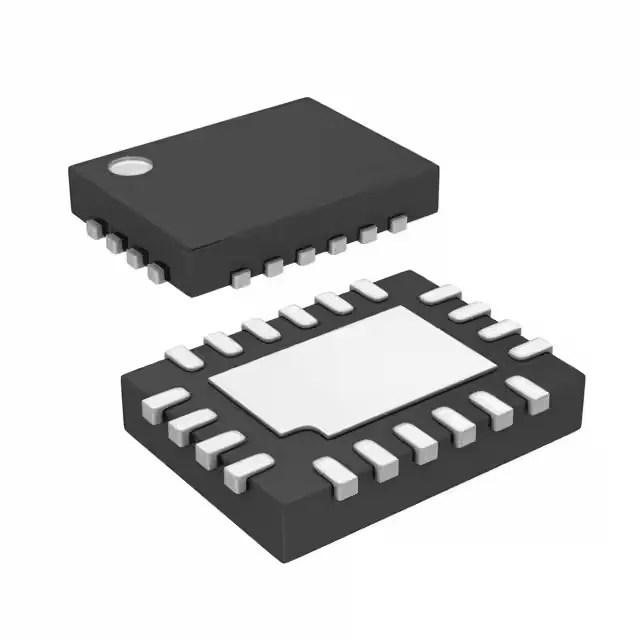
Microchip Technology DSC400-0333Q0032KE1 — Crystals & Oscillators

DSC400-0333Q0032KE1 MEMS XO – LVDS, 3-Output, 20-VFQFN

MPNDSC400-0333Q0032KE1
Active

Microchip DSC400-0333Q0032KE1, XO (Standard), MEMS resonator, LVDS output, three frequencies: 24.576 MHz, 24 MHz, 25 MHz, ±50 ppm stability, 2.25V–3.6V supply, Enable/Disable, 20-VFQFN exposed pad package.

Independent supplier — new & surplus stockAuthenticity-screened · ESD-safe packingListing updated Aug 2026

Specifications

DSC400-0333Q0032KE1 specifications
ParameterValue
TypeXO (Standard)
SeriesDSC400
Supply voltage2.25V ~ 3.6V
Frequency stability±50ppm
Frequency - output 124.576MHz
Frequency - output 224MHz
Frequency - output 325MHz
Operating temperature-20°C~70°C
Height0.035\" (0.90mm)
Size (Dimension)0.197\" L x 0.126\" W (5.00mm x 3.20mm)
OutputLVDS
PackageTube
FunctionEnable/Disable
Base resonatorMEMS
Case20-VFQFN Exposed Pad

Product details

MEMS clock with three independent LVDS outputs

The DSC400-0333Q0032KE1 is a MEMS-based XO (Standard) that outputs three separate LVDS clock frequencies from a single 20-VFQFN package: 24.576 MHz, 24 MHz, and 25 MHz. LVDS signalling keeps the edge rates clean and common-mode noise rejection high, which matters when the clock fan-out crosses a backplane or drives an FPGA bank that is sensitive to deterministic jitter.

Supply flexibility and enable/disable control

Runs from a 2.25V to 3.6V supply rail, so it can drop directly onto a 2.5V or 3.3V plane without an extra regulator.

Housed in a 20-VFQFN with exposed pad — the 5.00 mm x 3.20 mm footprint and 0.90 mm height fit dense PCIe or SFP+ line-card layouts where height clearance is tight.

Availability confirmed at RFQ.

Frequently asked questions

What are the three output frequencies of the DSC400-0333Q0032KE1?

The DSC400-0333Q0032KE1 outputs 24.576 MHz, 24 MHz, and 25 MHz simultaneously, all with LVDS levels.

Does the DSC400-0333Q0032KE1 support an enable/disable function?

Yes, the DSC400-0333Q0032KE1 includes an Enable/Disable function that gates the outputs, useful for power sequencing or test mode control.