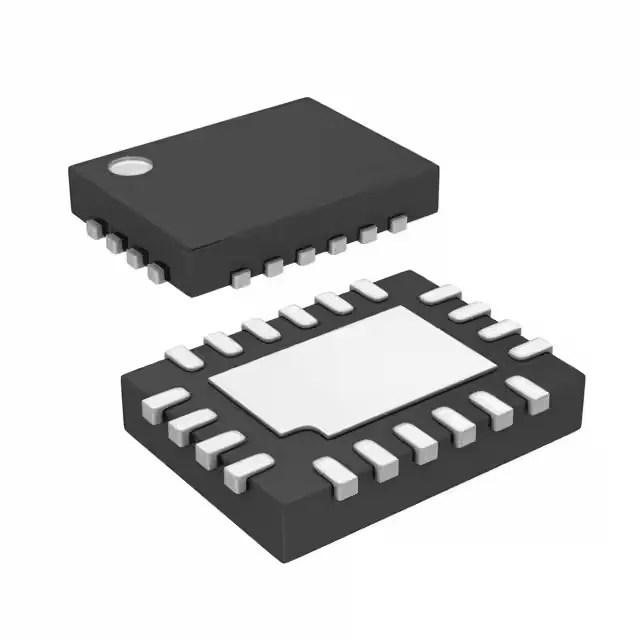
Microchip Technology DSC400-0303Q0092KI1T — Crystals & Oscillators

DSC400-0303Q0092KI1T MEMS XO – Dual 80 MHz LVDS, Active

MPNDSC400-0303Q0092KI1T
Active

Microchip DSC400 series, XO (Standard), MEMS base, dual 80 MHz LVDS outputs, ±50 ppm stability, -40°C to 85°C, 2.25V-3.6V supply, 20-VFQFN exposed pad package.

Independent supplier — new & surplus stockAuthenticity-screened · ESD-safe packingListing updated Aug 2026

Specifications

DSC400-0303Q0092KI1T specifications
ParameterValue
TypeXO (Standard)
SeriesDSC400
Supply voltage2.25V ~ 3.6V
Frequency stability±50ppm
Frequency - output 180MHz
Frequency - output 280MHz
Operating temperature-40°C~85°C
Height0.035\" (0.90mm)
Size (Dimension)0.197\" L x 0.126\" W (5.00mm x 3.20mm)
OutputLVDS
PackageTape & Reel (TR)
FunctionEnable/Disable
Base resonatorMEMS
Case20-VFQFN Exposed Pad

Product details

MEMS oscillator with dual LVDS outputs

LVDS differential signaling keeps the clock edges clean in noisy environments — useful when routing a high-speed clock across a mixed-signal board with switching regulators or digital busses nearby.

Industrial temp range and supply flexibility

The 2.25V to 3.6V supply range covers both 2.5V and 3.3V rails — no extra LDO needed if your board already runs one of those voltages.

Package and board layout notes

The 20-VFQFN with exposed pad (5.00mm x 3.20mm body, 0.90mm height) requires a thermal via array under the paddle for proper heat dissipation — the datasheet's recommended footprint is the starting point, not an option.

Frequently asked questions

How does DSC400-0303Q0092KI1T compare to a quartz crystal oscillator?

The DSC400 uses a MEMS resonator instead of a quartz crystal. MEMS oscillators are generally more resistant to vibration and shock, and they typically offer faster start-up times. The trade-off is that quartz can achieve tighter frequency stability in some high-end applications, but the ±50 ppm stability here covers most industrial and communications needs.

Can DSC400-0303Q0092KI1T operate at 3.3V supply?

Yes, the supply voltage range is 2.25V to 3.6V, so a 3.3V rail is well within spec. No external regulator is required if your board already runs 3.3V.