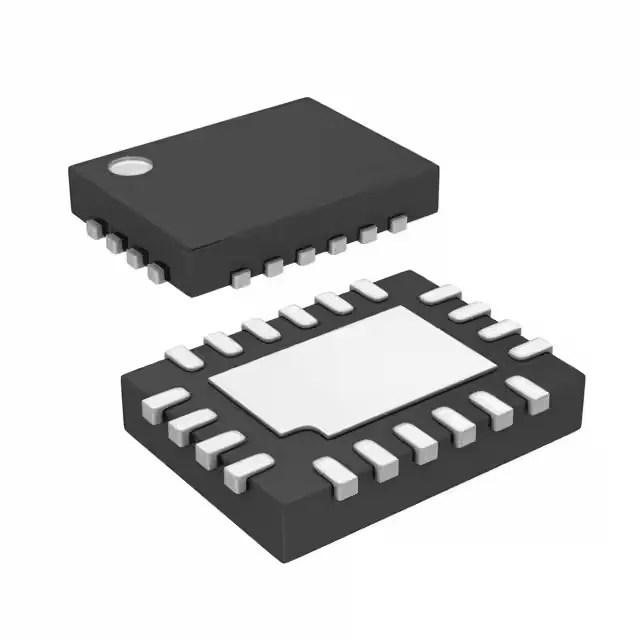
Microchip Technology DSC400-0303Q0086KE2T — Crystals & Oscillators

DSC400-0303Q0086KE2T MEMS XO – 148.5/148.35 MHz LVDS, Active

MPNDSC400-0303Q0086KE2T
Active

Microchip DSC400 series MEMS XO, dual-frequency LVDS output 148.5 MHz / 148.35 MHz, ±25 ppm stability, 2.25 V to 3.6 V supply, enable/disable function, 20-VFQFN package, active production.

Independent supplier — new & surplus stockAuthenticity-screened · ESD-safe packingListing updated Aug 2026

Specifications

DSC400-0303Q0086KE2T specifications
ParameterValue
TypeXO (Standard)
SeriesDSC400
Supply voltage2.25V ~ 3.6V
Frequency stability±25ppm
Frequency - output 1148.5MHz
Frequency - output 2148.35MHz
Operating temperature-20°C~70°C
Height0.035\" (0.90mm)
Size (Dimension)0.197\" L x 0.126\" W (5.00mm x 3.20mm)
OutputLVDS
PackageTape & Reel (TR)
FunctionEnable/Disable
Base resonatorMEMS
Case20-VFQFN Exposed Pad

Product details

Dual-frequency LVDS timing for video

The DSC400-0303Q0086KE2T is a MEMS-based XO (standard) from Microchip's DSC400 series, delivering two LVDS output frequencies: 148.5 MHz on output 1 and 148.35 MHz on output 2. These frequencies are standard for video clocking—148.5 MHz is the pixel clock for 1080p at 60 Hz, while 148.35 MHz is the 59.94 Hz variant used in NTSC-compatible broadcast equipment.

The supply voltage range of 2.25 V to 3.6 V covers 2.5 V and 3.3 V logic rails without an external regulator.

Active lifecycle and package footprint

The 20-VFQFN exposed-pad package (5.00 mm x 3.20 mm, 0.90 mm height) is a standard footprint for MEMS oscillators; the exposed pad must be soldered to a ground plane for thermal and electrical performance.

Frequently asked questions

What are the output frequencies of DSC400-0303Q0086KE2T?

Output 1 is 148.5 MHz; output 2 is 148.35 MHz. Both are LVDS.

What supply voltage does DSC400-0303Q0086KE2T require?

The supply voltage range is 2.25 V to 3.6 V, covering 2.5 V and 3.3 V rails.

Can DSC400-0303Q0086KE2T replace a quartz oscillator?

Yes, it is a MEMS-based XO that can drop into a standard oscillator socket if the supply voltage, output type (LVDS), and package footprint (20-VFQFN) match. The MEMS resonator is less sensitive to vibration and shock than quartz, but the board layout must accommodate the exposed pad.