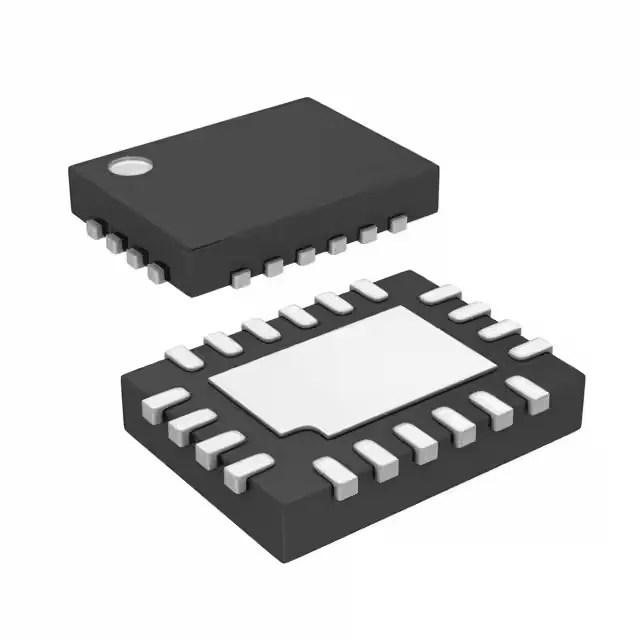
Microchip Technology DSC400-0202Q0107KI1T — Crystals & Oscillators

DSC400-0202Q0107KI1T MEMS XO – LVPECL, Dual Freq, Active

MPNDSC400-0202Q0107KI1T
Active

Microchip Technology DSC400 series MEMS XO (Standard), LVPECL output, dual fixed frequencies 161.1328125 MHz and 164.375 MHz, ±50 ppm stability, -40°C to +85°C, 20-VFQFN exposed pad package.

Independent supplier — new & surplus stockAuthenticity-screened · ESD-safe packingListing updated Aug 2026

Specifications

DSC400-0202Q0107KI1T specifications
ParameterValue
TypeXO (Standard)
SeriesDSC400
Supply voltage2.25V ~ 3.6V
Frequency stability±50ppm
Frequency - output 1161.1328125MHz
Frequency - output 2164.375MHz
Operating temperature-40°C~85°C
Height0.035\" (0.90mm)
Size (Dimension)0.197\" L x 0.126\" W (5.00mm x 3.20mm)
OutputLVPECL
PackageTape & Reel (TR)
FunctionEnable/Disable
Base resonatorMEMS
Case20-VFQFN Exposed Pad

Product details

MEMS XO with LVPECL – dual-frequency clock source

The DSC400-0202Q0107KI1T is a MEMS-based XO (Standard) from Microchip's DSC400 series, delivering two fixed LVPECL output frequencies: 161.1328125 MHz and 164.375 MHz. Supply voltage spans 2.25 V to 3.6 V, allowing the oscillator to run from a common 2.5 V or 3.3 V rail without an extra LDO.

20-VFQFN package – board layout considerations

Housed in a 20-VFQFN with exposed pad, 5.00 mm x 3.20 mm footprint and 0.90 mm height.

Active lifecycle – design-in ready

Product status is Active per Microchip's current lifecycle designation. The base product number DSC400 covers the family; this specific variant is the 0202Q0107KI1T frequency and stability option.

Frequently asked questions

What is the difference between the DSC400 and DSC600 series?

The DSC400 series offers dual independent output frequencies from a single MEMS resonator, while the DSC600 series is a single-output device. For applications requiring two synchronous clocks, the DSC400 eliminates a second oscillator and its associated PCB area.

Can the DSC400-0202Q0107KI1T be used in networking equipment?

Yes. The LVPECL output and dual frequencies at 161.1328125 MHz and 164.375 MHz are common in Ethernet switch and router clock trees. The industrial temperature range and ±50 ppm stability meet typical networking environmental requirements.