Dual-frequency LVPECL clock – what the outputs drive
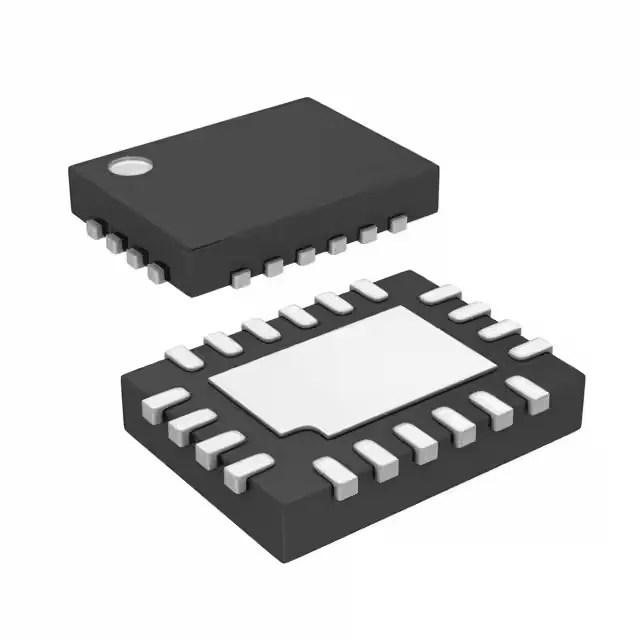
The DSC400-0202Q0107KE1T: This MEMS-based XO delivers two LVPECL clock outputs: 161.1328125 MHz on output 1 and 164.375 MHz on output 2, both from the same 20-VFQFN package. That pair is common in 10G/25G Ethernet, FPGA reference clocks, and SerDes PHYs where the PLL needs two close-but-distinct reference frequencies. The LVPECL output swings fast enough to drive a 100-ohm differential pair directly – no external biasing network needed for AC-coupled lines. ±50 ppm stability covers most base-T and fibre-channel jitter budgets without a separate VCXO.
MEMS resonator – why it matters for the BOM
That means better shock and vibration tolerance – relevant if the board goes into a fan-cooled chassis or a panel-mount enclosure subject to mechanical stress. No quartz crystal to crack or drift under moderate G-load. Supply voltage spans 2.25 V to 3.6 V, so it runs from a 2.5 V or 3.3 V rail without an extra LDO.
Package and temperature – board-fit constraints
20-VFQFN with exposed pad, 5.00 mm x 3.20 mm body, 0.90 mm height. Fine for indoor switching gear, test equipment, or office networking. Not for outdoor base stations, engine compartments, or cold-chain storage: those call for the industrial-temp variant of the DSC400 family.
No NRND flag. The DSC400 base number covers multiple frequency and stability options, so confirm the full order code before committing.