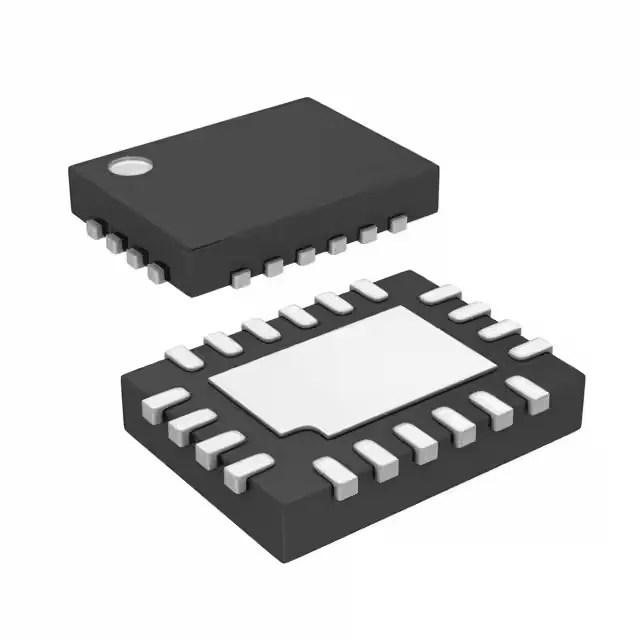
Microchip Technology DSC400-0103Q0102KE1T — Crystals & Oscillators

DSC400-0103Q0102KE1T MEMS XO – 148.5 MHz / 14.7456 MHz

MPNDSC400-0103Q0102KE1T
Active

Microchip DSC400 series MEMS XO (Standard), dual-output: 148.5 MHz (LVCMOS/LVDS) and 14.7456 MHz (LVCMOS/LVDS), ±50 ppm stability, 2.25-3.6 V supply, -20 to 70 °C, 20-VFQFN exposed pad package.

Sourced new & surplus through independent channelsAuthenticity-screened · ESD-safe packingListing updated Aug 2026

Specifications

DSC400-0103Q0102KE1T specifications
ParameterValue
TypeXO (Standard)
SeriesDSC400
Voltage2.25V ~ 3.6V
Frequency stability±50ppm
Frequency - output 1148.5MHz
Frequency - output 214.7456MHz
Operating temperature-20°C~70°C
Height0.035\" (0.90mm)
Size (Dimension)0.197\" L x 0.126\" W (5.00mm x 3.20mm)
OutputLVCMOS, LVDS
PackageTape & Reel (TR)
FunctionEnable/Disable
Base resonatorMEMS
Case20-VFQFN Exposed Pad

Product details

Dual-frequency MEMS clock source

The DSC400-0103Q0102KE1T is a MEMS-based XO (Standard) from Microchip's DSC400 series, delivering two independent output frequencies: 148.5 MHz on output 1 and 14.7456 MHz on output 2. Both outputs are configurable as LVCMOS or LVDS, giving the designer a single oscillator to drive a video clock and a serial/peripheral clock on the same device. Frequency stability is rated at ±50 ppm over the -20 to 70 °C commercial temperature range, and the supply voltage accepts 2.25 V to 3.6 V — a wide-enough window to run from a 2.5 V or 3.3 V rail without an external LDO.

Housed in a 20-VFQFN with exposed pad, measuring 5.00 mm x 3.20 mm and standing 0.90 mm tall, the DSC400-0103Q0102KE1T fits a standard QFN footprint. The exposed pad must be soldered to a thermal via array on the PCB — the datasheet's recommended land pattern (page 7) specifies a 3.2 mm x 2.2 mm pad with a 0.3 mm via grid for adequate heat transfer.

Frequently asked questions

What is the frequency stability of the DSC400-0103Q0102KE1T?

Frequency stability is ±50 ppm over the -20 to 70 °C operating range. This is the nominal stability specification — adequate for most video and serial clock applications that do not require Stratum-level holdover.