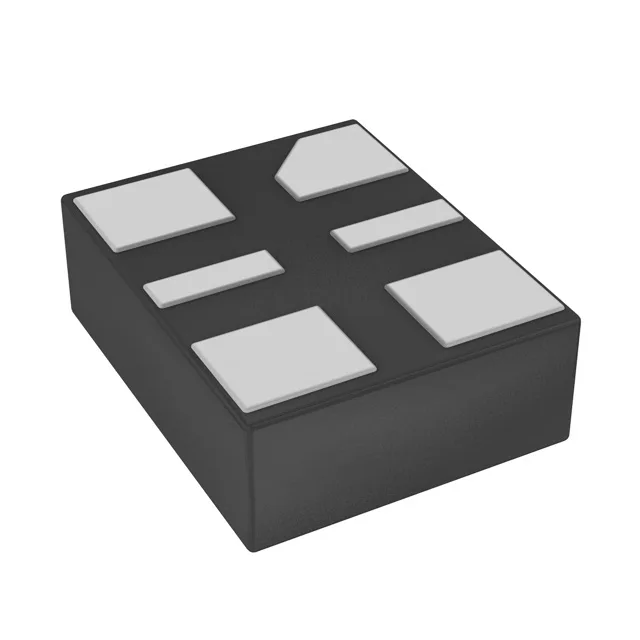
Microchip Technology DSC2311KI2-R0029T — Crystals & Oscillators

DSC2311KI2-R0029T MEMS XO – Microchip, Dual 130 MHz CMOS

MPNDSC2311KI2-R0029T
Active

Microchip DSC2311KI2-R0029T, XO (Standard) MEMS oscillator, dual 130 MHz CMOS outputs, ±25 ppm stability, 2.25V–3.6V supply, -40 to 85°C, 6-VDFN package.

Independent supplier — new & surplus stockAuthenticity-screened · ESD-safe packingListing updated Aug 2026

Specifications

DSC2311KI2-R0029T specifications
ParameterValue
TypeXO (Standard)
SeriesDSC2311
Supply voltage2.25V ~ 3.6V
Current - supply (Disable)23 mA
Frequency stability±25ppm
Frequency - output 1130MHz
Frequency - output 2130MHz
Operating temperature-40°C~85°C
Height0.035\" (0.90mm)
Size (Dimension)0.098\" L x 0.079\" W (2.50mm x 2.00mm)
OutputCMOS
PackageTape & Reel (TR)
FunctionEnable/Disable
Base resonatorMEMS
Case6-VDFN

Product details

MEMS oscillator with dual 130 MHz CMOS outputs

The supply voltage spans 2.25V to 3.6V, so the same BOM line works across 2.5V and 3.3V rails without a separate regulator or level translator.

Housed in a 6-VDFN package measuring 2.50 mm x 2.00 mm with a height of 0.90 mm, the DSC2311KI2-R0029T fits under low-profile enclosures and alongside dense BGA devices. Current draw in disable mode is a maximum 23 mA, so pulling the enable pin low cuts the oscillator's supply current while keeping the rail alive for other loads.

Supplied on Tape & Reel (TR), which is the standard carrier for automated pick-and-place assembly.

Frequently asked questions

Is DSC2311KI2-R0029T a direct replacement for a standard quartz oscillator?

Yes, it is a drop-in functional replacement for a 6-pin CMOS XO with the same footprint and output type. The MEMS resonator inside is more shock-tolerant than a quartz crystal, but the electrical interface — CMOS levels, enable/disable pin, supply range — matches standard oscillator behaviour.

Does DSC2311KI2-R0029T have an enable/disable function?

Yes, the function is listed as Enable/Disable. Pulling the enable pin low disables both CMOS outputs and drops the supply current to a maximum of 23 mA.